
On the Death of Authenticity in the Age of Applause
The Roman Empire was never the largest. It wasn’t even the most durable if you count the empires that quietly bled into eternity in the East. But it was the one that mattered. It defined an age, an architecture, a psychology of dominance. Its ruins still hum with that peculiar electricity of a civilization that knew exactly what it was, and what it would cost to be it.
In the high noon of Rome, when conquest was a civic religion and the legions the priests of empire, victorious generals were granted their triumphs — public parades through the city’s marble arteries, bathed in incense, applause, and the obscene perfume of success. They rode in gilded chariots past screaming masses, the Senate fawning, the slaves sweeping flower petals across their path. Rome, the whore and the mother, celebrated her latest god.
And behind that god — behind the laurel crown and the golden armor — stood a slave. Whispering.
“Memento mori,” he said. Remember that you are mortal.
It was the oldest kind of mercy: the truth disguised as humiliation.
Whether that whisper ever reached through the general’s intoxication is doubtful. Men drunk on adoration rarely hear the quiet things. But the ritual mattered, because it acknowledged something most of us have since forgotten — that applause is both narcotic and poison. That it inflates until it suffocates. That every cheer carries within it the seed of your undoing.
The memento mori was meant for the mighty. But perhaps it was premature to confine it to them. In our century, every idiot has a podium and every minor wit an audience. We are all little emperors now, each with our digital Senate, each chasing our pixelated triumph. And yet the whisper — the reminder — is gone.
We might do well to revive it.
The Algorithmic Triumph
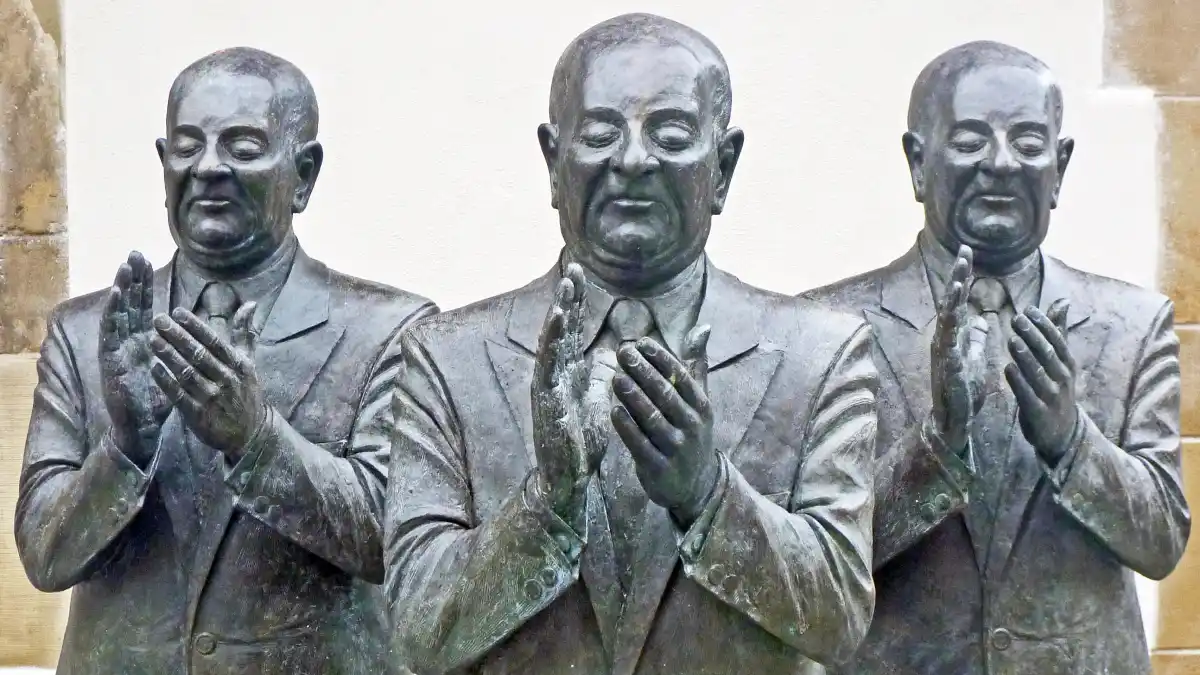
The Roman general paraded his spoils through the Forum. We parade ours through timelines. We count the claps and hearts as if they meant something real — the crowd’s applause rendered as data. Modernity has industrialized the triumph. You don’t even have to win a war to earn one. Post a clever remark, a filtered photo, a short clip with the right flavor of indignation, and you’ll have your cheering horde.
And yet — just like the Roman general — you will start to believe it. The dopamine whispers louder than the slave ever did. “You matter,” it says. “They love you.” And so begins the quiet death of selfhood, one notification at a time.
The tragedy isn’t in wanting to be seen. That’s human. We crave witnesses to our effort — the way a dog brings back a dead bird, tail wagging, proud. We want someone to say: You did this. You exist.
But that craving, ungoverned, turns into a leash. You stop doing the work for its own sake and start performing for the applause. The leash tightens with every clap — and when the noise fades, you twitch in withdrawal. The performer forgets there was ever a person beneath the costume.
That’s the quiet rot of our age: we’ve replaced creation with performance, truth with theater. Every thought must be staged, every opinion optimized. We aren’t living — we’re auditioning.
Enter Lucrezia
There’s a woman I think of when I write about performance. Lucrezia Borgia. Daughter of a Pope, sister to a madman, mistress of power, scapegoat of history. A woman accused of every crime but credited with none of her intelligence. The Renaissance was a carnival of masks, and she wore hers better than most.
Imagine her — late at night, in some candlelit room in Ferrara or Rome. Quill in hand, face half-shadowed, writing letters no one was meant to see. Letters to no one, perhaps. Not poison, not intrigue, just thought. Because even the most gilded cages need an air hole.
She knew what it was to live for an audience. Her entire existence was choreography — marriages for alliance, smiles for survival. And like all performances, it devoured the performer. At some point, she must have stared into a mirror and wondered: Which mask is mine?
That’s the crucible where identity burns away. You play the part so long you forget the line between costume and skin. The applause becomes oxygen. The silence becomes terror. You need it, even when it disgusts you.
Lucrezia, I suspect, understood this better than her chroniclers. Somewhere in those letters — now mostly lost or misattributed — she carved a small space of defiance. Writing for herself, not for the papal court, not for the gossiping dukes. For herself. Because it was the only way to stay sane when the crowd that cheered your wedding also cheered your annulment.
We’re not much different. Anyone who dares to create — honestly create — is walking that same knife’s edge. The moment you expose anything real, the mob assembles. They’ll adore you, briefly. Then they’ll dissect you. And if you’re not careful, you’ll start shaping your work to please them. You’ll let them trim your edges. You’ll become accessible.
That’s how originality dies. Not through censorship, but through consensus.
The Silence Between the Claps
Here’s the secret: the people whose approval you chase are themselves chasing someone else’s. It’s a daisy chain of dependency — a hierarchy of hollowness. Everyone running with a borrowed torch, hoping someone notices the light.
It’s not even evil. It’s just the architecture of modern life. The design of every social platform, every career path, every market — all tuned to make applause the currency of survival.
Orwell saw it coming. Animal Farm wasn’t about pigs and horses — it was about applause. The animals started with vision: equality, dignity, shared purpose. But then came the pigs, who discovered that controlling the cheer was more powerful than controlling the truth. “Four legs good, two legs better.” The chant became the creed. The barnyard roared. And they died happy — because at least they died approved of.
We do the same. We internalize our own Squealers — those little bureaucrats in the mind who whisper, Tone it down. Fit the narrative. Be agreeable. And soon the work becomes a mirror of public appetite, not private necessity. The original impulse — that raw pulse of self-expression — gets replaced with a polished product. A corpse in makeup.
The applause is the lie that keeps it walking.
Fat on Praise
Feedback feels like food. It isn’t. It’s sugar water. It fattens but doesn’t feed. You can live on it for a while, but you’ll grow sluggish, sentimental, predictable. Fat things move slow. Fat things get slaughtered.
The artist’s proper diet is solitude, discipline, and the occasional bite of constructive cruelty. You need opposition more than approval. Because the crowd, in its mercy, will always cheer what it already understands — and understanding is the death of novelty.
Most people don’t even see. They react. They clap by reflex, boo by contagion. They don’t know why they feel the way they do — only that someone else did first. If you build for them, you’ll become them.
The only sustainable craft is one built for yourself, against the grain, in defiance of metrics. Because only what costs you your comfort will survive the silence that follows.
A Compass, Not a Weather Vane
If you want to make anything that still looks like you after the applause fades, you need a compass. Not a weather vane.
The applause is wind. The silence is wind. The trends, the critics, the markets — all just weather. The compass is the part of you that doesn’t turn. It’s heavy, inconvenient, unprofitable — but it’s the only thing worth trusting.
Critique isn’t poison, but it’s arsenic. Dose carefully. Digest slowly. Flush it often. Because too much of it, and you’ll wake up one day speaking in someone else’s voice.
They’ll call this arrogance. Fine. Let them. Arrogance, properly rooted, is just the refusal to kneel before the wrong god.
Make your lair beautiful — but yours. Let it be misunderstood, mocked, or ignored. Never beg for nods.
The Private Fortress
Let’s return to Lucrezia. Surrounded by ambition, propaganda, and papal corruption, she still managed to carve a private realm. Patron of the arts, administrator, poet, strategist. She wore her masks, yes, but she owned them. Beneath the silk and diplomacy, there was steel — an inner sanctum. A compass.
That’s what it takes to survive the theater of modernity. You need a fortress of self that no audience can breach. Because the system will always try to rewrite you in its own dialect — friendly, marketable, obedient.
The applause is their instrument. The silence, their punishment. The only defense is indifference. The kind born not of cynicism but of clarity.
Where the Work Is Still Raw
Let’s be brutally honest: most people are not equipped to see real art or truth. They’re trained to consume, not to contemplate. You offer them something sacred, and they’ll pet it, poke it, or try to monetize it. They won’t understand that you had to bleed to make it.
That’s not their fault. But it’s not your problem either.
You have two choices: pander, or endure. There is no third.
So yes, share your work. But trust applause about as much as you’d trust a drunk with your bank code. And when you get it — when the crowd surges with approval — remember that it’s rented. They’ll turn tomorrow. They always do.
If you build for them, you’ll die bewildered. If you build for yourself, you’ll die understood — even if only by one person. Maybe that person is you. That’s enough.
Because at the end, you will face one audience. One critic. One mirror.
Death Becomes Her
In 1992, Robert Zemeckis directed Death Becomes Her — a black comedy about vanity and immortality. Madeline and Helen, desperate for youth and validation, drink a potion that grants them eternal beauty but robs them of soul. They become literal shells of themselves — glossy, hollow, indestructible.
Their lover, Ernest, is offered the same choice. He refuses. He walks away. Builds a life. Dies like a man instead of living like a brand.
That’s the real immortality — not eternal youth, not eternal applause, but a finite life that was yours. Ernest filled his years with life, while the women filled their life with years. His compass outlasted their mirror.
The Final Mirror
That’s how it ends, for everyone. The stage empties. The noise dies. The followers drift to new idols. And there you are — alone in the dressing room, makeup cracking, mask in hand.
You will meet the mirror. And it will ask, Was it yours?
If you built for them, you’ll see a stranger — a creature stitched together from feedback and fear. But if you built for yourself, you might just recognize the face looking back.
That’s the quiet triumph — the one without the parade. The one with no crowd, no petals, no trumpet. The one that doesn’t need to be seen to be real.
So build for that. Build for the aftermath. Build so that when the whisper comes — memento mori — you can answer, without shame:
I remember.