
Why Silence Became the Ultimate Rebellion
Most people have heard of El Niño—that erratic tantrum of the Pacific Ocean, where warm water piles up in the east, the trade winds falter, and the planet’s climatic mood swings begin. When the imbalance reaches its threshold, the air and ocean flip roles, pressure patterns reverse, and the ocean cools again.
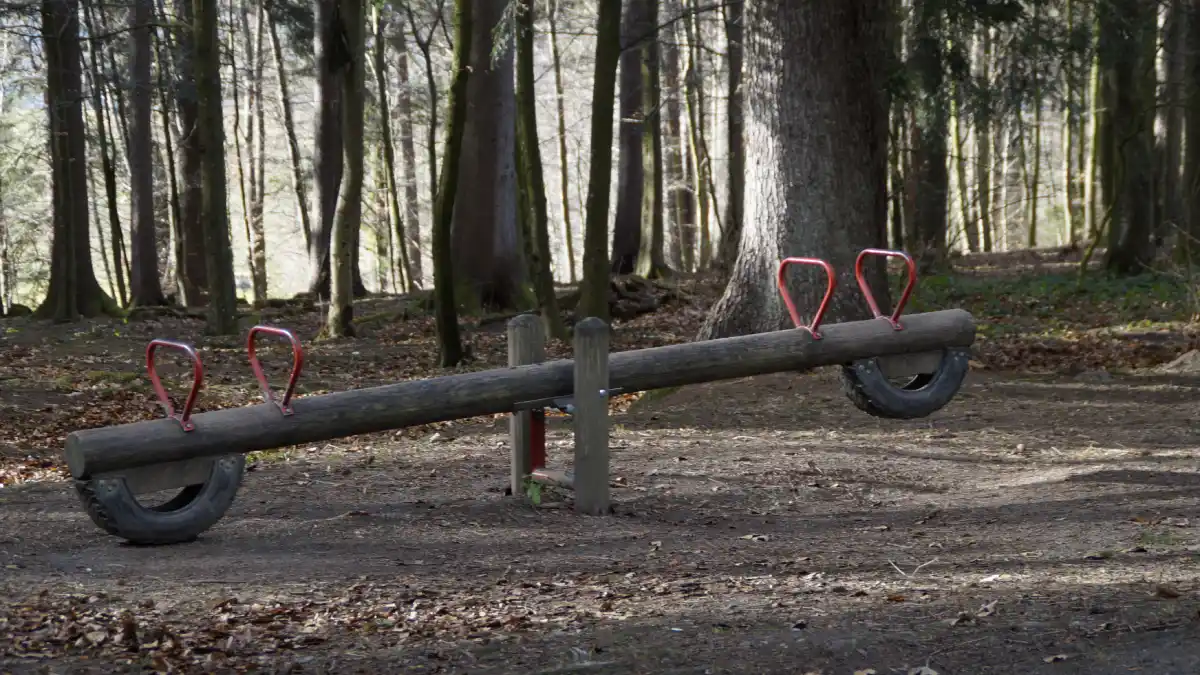
It’s one of nature’s more famous demonstrations that everything, if taken far enough, becomes its own opposite. The warmth creates the cold, the calm breeds the storm, and every movement loads its counterweight. A giant teeter-totter creaking between extremes, each descent feeding the next ascent.
Nature knows these cycles intimately. Humanity, ever eager to imitate the gods, invented civilization—its own massive apparatus of rise and fall. Once we began clustering in tribes of hundreds and thousands rather than fifties, the same law took hold: the more we build, the more we prepare the ruins.
A much younger version of me fought that idea with all the energy of youth.
I grew up in Austria in the Seventies and Eighties, a country wedged between NATO’s anxious optimism and the Warsaw Pact’s gray menace. The second half of my youth unfolded three miles from the Iron Curtain. We often biked there, just boys on summer afternoons, pedaling toward a literal edge of the world. We’d stop where Austria ended and Czechoslovakia began, throw stones, shout across the invisible divide, and stare at the fences and towers standing a few hundred meters away.
We didn’t need a political education to grasp what those fences meant. Even through the lens of childish mischief, we sensed that what lay beyond was not something we wanted. No one had to explain Marx, Engels, or the dialectic. You don’t need theory when you can see the gun turrets. Kids’ logic: crude but reliable.
That kind of exposure carves lessons deep into your bones. It teaches you that evil doesn’t always wear horns; sometimes it wears uniforms and bureaucratic smiles. It teaches you the helplessness of those born on the wrong side of fortune, and the fragile luck of those born free. Propaganda dissolves quickly when it meets barbed wire and mines.
I was also a bookish child—though not the fragile, dusty kind. I played rough, rolled in the dirt, but I always ended up back among the books my parents kept in their small collection. They were a random assortment: history, politics, philosophy, a bit of science. Enough to open mental doors I didn’t yet know how to walk through.
My father encouraged that curiosity, sometimes against his own better judgment. He was a curious mix himself—part independent craftsman, part reluctant socialist, an individualist who distrusted institutions but occasionally flirted with utopian ideas. He despised clubs, hated uniforms, and distrusted anyone who needed a title to feel significant.
As the oldest of seven, I was his sounding board, and I endured—and enjoyed—his political monologues. They were erratic, contradictory, and full of unfiltered passion. Out of that chaos grew my lifelong suspicion of every grand narrative. My father had never been forced to serve—too young for Hitler, too old for the new Austrian army—but he carried the wary independence of someone who had seen too much history pass by to ever trust it.
The Early Questions
Even as a teenager, I wondered how long communism could last. How long could any system survive that ran directly against human nature? Surely people wouldn’t tolerate repression forever. Surely hunger would drive them to revolt. Surely planned economies couldn’t outlast markets. I was half right and fully naive.
When I moved from Austria’s quiet borderlands to Vienna, communism cracked and the Soviet Empire disintegrated. I remember feeling vindicated, as if history itself had shaken my hand. But the feeling faded fast. Reality refused to match the grandeur of my expectations. The world didn’t suddenly become free or happy. The pendulum had swung, yes—but the scenery on both sides looked depressingly familiar.
Still, I took comfort in the lesson: things that defy reality eventually fall. Empires held together by fear crumble. Economies built on fantasy implode. Companies that can’t survive without subsidies vanish. Reality is patient but merciless.
The Modern Mirror
Now, in 2025, I can’t help but see the same arc in the energy world. Wind and solar were always too expensive, too unreliable, and too dependent on the very fossil systems they claimed to replace. Battery cars—fire-prone, costly, and environmentally absurd—were sold as salvation. Now the cracks show. Electric vehicle adoption plummets, projects collapse, and subsidies dry up. Even the UN’s cherished carbon tax on global shipping has sunk without a trace.
The teeter-totter moves again. The “green transition,” once the religion of polite society, begins its slow slide into disillusionment.
Just a year ago, Austria’s branch of Last Generation—those self-righteous climate zealots who glued themselves to roads in moral ecstasy—announced they would disband. Vindication served cold.
I was right.
Or was I?
The Long Unraveling
History doesn’t always reverse neatly. Sometimes it just drags on, wasting decades before admitting its mistake. The Soviet Union took seventy years to implode. The shockwaves are still shaking us. Ukraine bleeds today because of fault lines drawn long before most of its soldiers were born.
If the logic of the teeter-totter were perfect, North Korea should have vanished by now. It hasn’t. Maybe hunger, instead of triggering revolt, breeds submission. Starving people don’t rebel; they conserve energy. East Germany and Romania never reached that level of despair—and perhaps that’s why they found the strength to revolt. North Korea simply sank deeper, far enough that even the swing of the pendulum can’t reach it.
So perhaps we’re not passengers on a predictable ride but captives of a derailed one—still moving, but no longer certain toward what. Can we steer the motion? Can we slow or hasten it? Or are we all just passengers on history’s absurd amusement park ride?
The Tides and the Price
Elon Musk calls it the tides of history: empires rise, mature, rot, and collapse. Each order believes itself immortal until the new one arrives. It’s not a new insight—just one we keep forgetting.
Israel, two years ago, was reminded the hard way. On October 7th, it learned what happens when consequences are postponed for too long. For years, leaders lulled themselves with euphemisms like “cutting the grass,” pretending that recurring violence could be managed indefinitely. The tide rolled in anyway, and it rolled in blood.
History always collects its debts.
So the real question remains: are these cycles truly inescapable, part of the universe’s design, or are they merely the aggregate result of our own blindness? Do we fall because gravity demands it, or because we insist on climbing the same unstable ladders?
Here’s the uncomfortable truth: even if we could stop the cycle, we wouldn’t. Human nature forbids it. To maintain balance requires awareness, restraint, and humility—commodities perpetually in short supply. At any given time, only a tiny fraction of people manage to escape the crowd’s mass stupidity. The rest march in rhythmic ignorance toward the next swing.
The Individual Escape
Collectively, we are doomed to ride the teeter-totter forever. Individually, though, we can step aside. The few who cultivate meaning, resilience, and detachment can rise above the motion. They stop expecting the ride to make sense. They learn to stand still while everything tilts.
That is real freedom—not to escape the oscillation but to be unmoved by it.
In the end, the teeter-totter is a children’s toy, never meant for civilizations to balance on. Children don’t calculate outcomes; they laugh, they fall, they get back on. Their ignorance of catastrophe is their wisdom.
Maybe that’s our path too—to rediscover joy in motion, even when the motion makes no sense.
Because while no nation, ideology, or species can escape the teeter-totter, the few who can enjoy it have already won. Everyone else is just hanging on, mistaking the swing for destiny.