
Why “Free Trade” Was Never Free and Rarely Trade
In the older, wiser corners of nature — the ones unbothered by our modern mythologies of progress — life tends toward arrangements of mutual benefit. Two organisms stumble into a situation where each does something the other finds useful, and rather than immediately devouring the weaker party (as is fashionable among humans), they settle into a truce of convenience. Biology calls this a symbiosis. Both parties invest because both parties profit. Simple. Elegant. Not a TED talk in sight.
The examples are so abundant that schoolchildren can recite them before they learn the alphabet. The clownfish and the anemone: the gaudy little fish scrubs the anemone and feeds it with whatever its digestive process doesn’t quite finish. In return, it enjoys the anemone’s stinging refuge — a security service paid for in fish droppings. Nature doesn’t bother with dignity; only balance. The same basic contract exists between humans and the gut bacteria we like to pretend we’re superior to. They break down food so we stay alive. We provide a warm intestinal condominium in which they can throw their eternal biochemical parties. Call it collaboration, call it captive residency — either way, we all know who’s really in charge.
And then, of course, there’s the poster child of mutualism: bees and flowers. A delicate ballet of pollination in exchange for food. Both species thrive. Both species expand. Both species optimistically assume humanity won’t finish them off next Tuesday. And if you need something a little more brutal (yet still cooperative), picture the ant and the plant louse: the ant plays bodyguard, and in exchange, it harvests the sweet excretions the louse produces. Yes, even in the insect world, someone is always milking someone else.
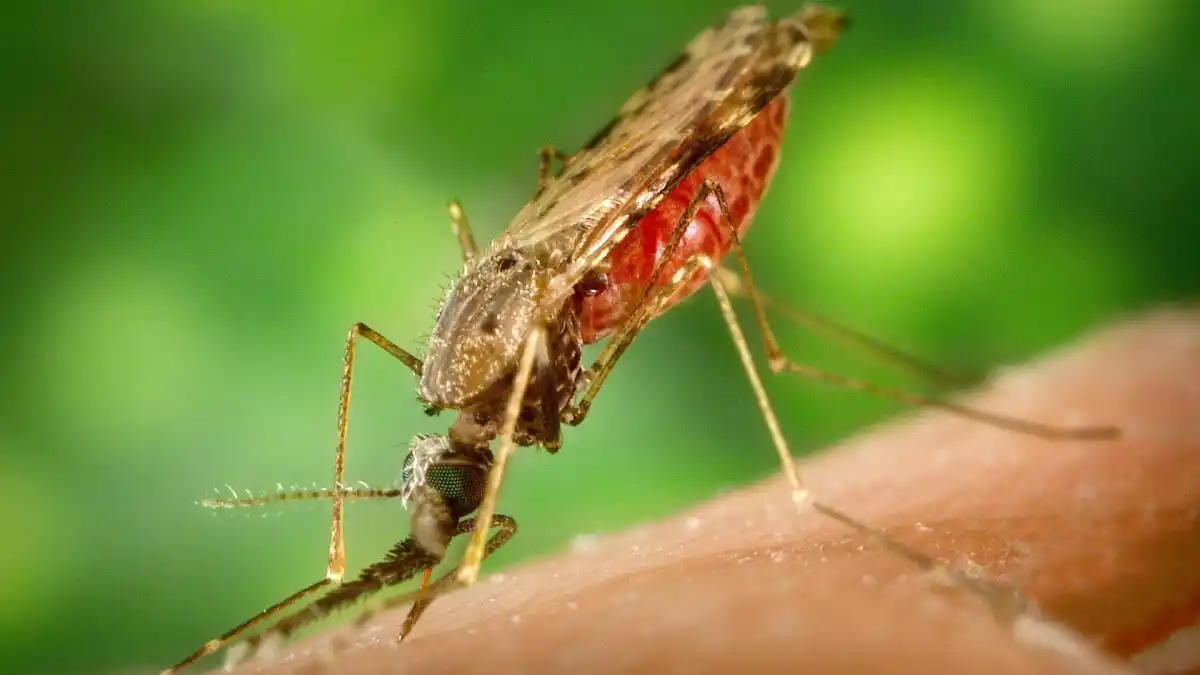
But not all relationships are so balanced. Sometimes the dance turns lopsided. One partner stops contributing and starts extracting. Symbiosis collapses into parasitism. Some relationships were parasitic from the beginning — polite fictions don’t change the underlying biology. Consider the mosquito and every mammal large enough to annoy. Show me a single upside to being punctured by a buzzing aerial syringe and I’ll happily revise my worldview. Mosquitoes get a blood meal; we get itching, disease, and existential irritation. The balance sheet is gloriously one-sided.
Yet parasitism isn’t confined to finches, fungi, or creepy crawlies. It scales upward with absolute enthusiasm. Parasitism happily infects structures, institutions, and entire civilizations — and we’re far too sentimental to admit it.
In a well-governed fantasy world, governments and citizens would enjoy a tidy little symbiosis of their own. Citizens supply revenue, governments provide stability and security, both sides enjoy their allotted comforts, and neither mistakes the other for a feeding trough. But we do not live in that fantasy. We live in a world where governments metastasize into such gargantuan beasts that citizens can barely discern any benefit from feeding them. What began as a relationship of mutual support gradually mutates into a one-way siphon. The host grows thinner. The parasite grows fat. The arrangement is politically justified, of course — parasites always believe they’re indispensable.
The same imbalance arises between countries and the so-called “international community,” a term used primarily by diplomats and journalists who need a warm fuzzy label for a geopolitical knife fight. The phrase suggests a global village of friendly neighbors tending communal gardens and exchanging homemade jam. The reality is closer to a condominium association where half the participants don’t pay dues, the other half resent each other, and everyone accuses everyone else of breaking the pool rules.
This sentimental fiction becomes especially saccharine when we talk about “free trade.” Few things inspire such breathless optimism among economists as the notion that nations can specialize in what they do best, exchange their products, and all ascend together into the sunlit uplands of prosperity. It’s a lovely theory. A noble theory. A theory that works brilliantly in textbooks and quaint historical anecdotes involving oranges and timber and ancient Greek merchants peddling amphorae. But the romance ends there.
Reality, as usual, refuses to cooperate.
Even in antiquity, trade wasn’t quite the egalitarian picnic it’s often portrayed as. And once colonialism rolled onto the scene with its cheerful blend of conquest and ledger-book morality, the whole “mutual benefit” façade collapsed. Colonies shipped raw materials to the imperial power, which then sold back finished goods at prices that would make a loan shark blush. Free trade? Hardly. It was “trade” in the same sense that mugging someone and selling their wallet back counts as a marketplace transaction.
In the contemporary era, the dynamic hasn’t improved much. Countries no longer trade exotic spices and handcrafted luxuries; they trade mass-produced consumer goods indistinguishable in every respect except cost. And in the global race to the bottom, cost is king. Whoever manufactures most cheaply dominates. Full stop. Romantic illusions need not apply.
And what determines cost today? Not tropical breezes or fertile soil, but regulation — or the lack thereof. Labor protections, environmental standards, bureaucratic hurdles, and the entire sprawling apparatus of compliance. Every regulation comes with a committee attached, and every committee comes with a bill.
Take mining. In a developed country, extracting anything from the earth involves navigating a labyrinth of rules, consultants, environmental impact assessments, community forums, activist groups with clipboards, and academic studies authored by people who’ve never seen a mine but have powerful opinions about them. Each obstacle adds cost. Each delay adds cost. Time is money, and the long tail of modern compliance is very long indeed.
In this brave new world, activists have perfected a sleek form of extortion: fund our study, meet our demands, pay our experts, and perhaps — if the stars align — we’ll permit your project to inch forward. It’s protection money dressed as moral concern. Meanwhile, entire industries teeter under the weight of this ritualized interference.
Now shift your gaze elsewhere. Congo, for example, where children scrape rare earth minerals from the ground with their bare hands, unimpeded by regulatory frameworks or environmental protections. No consultants. No compliance officers. No “community engagement workshops” featuring PowerPoint presentations and paper cups of lukewarm coffee. Just raw extraction with a human cost the developed world politely pretends not to notice.
In countries where labor regulations look suspiciously like suggestions, and wages hover somewhere between “starvation” and “indentured servitude,” production is cheap — gloriously cheap. Not because these countries possess some unique climatic advantage, but because they simply don’t care. Misery is part of the price structure.
And so manufacturing gravitates toward these lawless havens. Not because the products are better. Not because the people are more skilled. But because the ethical floor is so low you need spelunking gear to find it.
Is this the invisible hand at work? Or is it merely the invisible shrug of economies outsourcing their sins?
Consider the numbers. In 1985, China produced less than 5% of the world’s manufactured goods. The United States produced roughly 25%. Four decades later, China hovers just below 30% — nearly a third of global output — while the United States has slipped to about 15% and falling. That shift did not happen because China discovered a new kind of genius. It happened because China was willing to become the global sump for environmental devastation, exploited labor, and industrial shortcuts the West could no longer stomach — or admit to participating in.
The result is simple: we import goods at bargain prices, and those goods arrive with invisible footnotes — each pointing to some distant river poisoned by industrial runoff, some village choking on smog, some factory where human beings are treated as disposable machine parts. We congratulate ourselves on consuming “sustainably” because we recycle plastic bottles and vote for green parties, while the actual environmental cost has been neatly exported to countries keen to accept our hypocrisy at a discount.
In theory, free trade should ignite innovation, competition, and the animal spirits of entrepreneurial ambition. It should reward excellence, punish inefficiency, and drive everyone toward mutually beneficial exchange.
In theory.
In practice, many of these trade relationships are not symbiotic at all. They’re parasitic — grotesquely so — and the parasite isn’t always the one we think.
COVID-19 merely revealed what had long been true. The pandemic didn’t create a parasitic imbalance between China and the developed world; it exposed it. Like all crises, it ripped the curtain off the global stage and forced ordinary people to confront what economists politely ignored.
Suddenly, the world’s most “advanced” nations couldn’t produce simple face masks. Hospitals scrambled for basic protective equipment. Supermarket shelves emptied of goods as mundane as rice and pasta because supply chains — stretched across continents like fragile surgical sutures — failed under the slightest strain. It wasn’t luxury goods or electronics that vanished first. It was bread-and-butter essentials. And when a society cannot produce or procure essentials without begging a geopolitical rival to ship crates across an ocean, the fiction of mutually beneficial interdependence collapses.
People noticed. People asked uncomfortable questions. Many rushed to defend the old arrangement: “It’s not parasitism. It’s globalization! Everyone benefits! Cheap goods! Efficient production! Comparative advantage!” Sure. And if you squint hard enough, you can also call a leech a fitness coach.
No matter how one measures the relationship, the fundamental imbalance remains. One side externalizes environmental and human destruction; the other side externalizes moral responsibility. The West offloads pollution to China and then parades around with a halo made of recycled materials, congratulating itself on its ethical enlightenment. The arrangement is, in many ways, a perfect parasitic loop. The developed world gets to signal virtue. China gets to poison itself for profit. Each exploits the other’s weakness.
And what do we call such a relationship? Free trade, apparently.
Historically, there are really only two types of international trade arrangements. The first is deliberate parasitism: the stronger power “suckles” the weaker one to strength in exchange for political loyalty. A calculated investment in future influence. The Marshall Plan is the classic example. The United States poured resources into Europe not out of charity but to create a bloc capable of resisting the Soviet Union. It worked. At least for a while.
The European Union’s cohesion funds operate on similar logic, though with considerably less success. Wealthier countries funnel money into poorer regions to create economic stability — or at least to buy the appearance of it. But the results are uneven. Parasitic relationships rarely convert into true partnerships. More often, the host weakens while the beneficiary grows dependent.
The second type of arrangement is a partnership between equals. Or close enough that neither can dictate terms unilaterally. In such relationships, labor protections, environmental standards, and regulatory frameworks are roughly aligned. Enforcement mechanisms exist. Both sides have skin in the game, and neither can get away with poisoning rivers or exploiting slave labor without consequences.
But these arrangements are rare. And temporary. Every symbiosis has an expiration date. Every mutually beneficial exchange sours eventually. Even in nature, when conditions shift, the once-friendly relationship devolves into exploitation or collapse.
Countries are no different.
The fantasy of eternal free trade is precisely that — a fantasy. A comfortable illusion sold to citizens who want cheap goods without moral complications. But like all illusions, it fractures under stress. COVID-19 was simply the hammer that struck the glass.
We are not engaged in some planetary brotherhood of mutual uplift. We are participating in a global shell game where costs accumulate out of sight, benefits are unevenly distributed, and the line between symbiosis and parasitism is determined not by morality but by leverage.
And the house always wins — until it doesn’t.