Marcus Stone

Marcus Stone

The Myth of the Great Leap

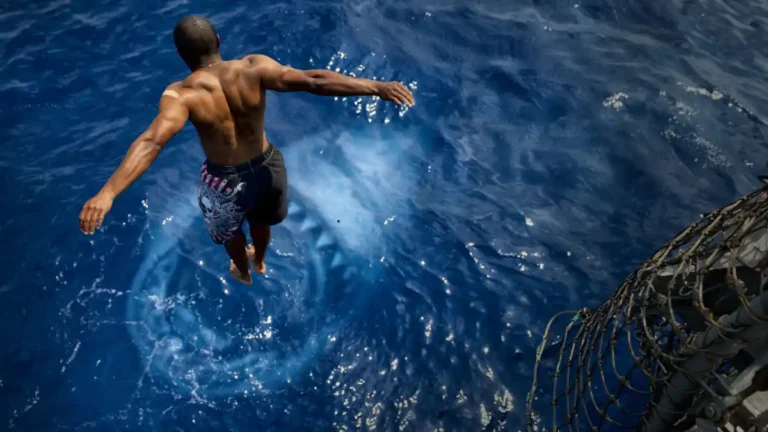
Man mid-air leaping into the deep blue ocean, captured from behind as he plunges away from a ship’s edge.

We were promised utopia—fusion in a bottle, cities on Mars, salvation by solar panel. What we got instead were subsidies, sermons, and disappointment. Progress is no shining staircase but a drunk stumbling through a swamp: crooked, halting, and blind. We dream in straight lines, yet reality forever drags us sideways.

Through the Noise, Barely

A solitary man sits on a small stool in a dim prison cell, facing barred windows where pale light filters through, casting long shadows across the floor.

We all live inside frames—cages of habit, obedience, and borrowed conviction. Some decorate theirs with flags, others with slogans, most with silence. But the anarchist scratches at the bars, not out of hope, but hunger: to taste a sliver of raw existence unfiltered by hierarchy, unblessed by authority, unowned by anyone.

The Paper Cathedrals of Academia

A fragile house of cards in black and white, spotlighted to reveal its precarious construction.

Academia does not traffic in truth; it barters in narratives, polished like relics for a congregation desperate for certainty. Professors genuflect before consensus, mistaking repetition for rigor, while reality stands outside the lecture hall, uninvited and unmoved. The cathedral of scholarship is built not on stone, but on paper—and termites are feasting.

Steel Without Flesh

Giant iridescent soap bubbles drifting across weathered stone steps in front of a faded building.

Quantity dazzles at parades, but wars are not won by hulls and hardware. They are won by scar tissue, trust, and the muscle memory of failure. From Stalin’s tank waves to China’s carriers and Russia’s humiliation in Ukraine, the real test is not how much metal you can build, but how much flesh you can trust.

The Long Reckoning

A crocodile lurking just below the water’s surface, eyes fixed and waiting, blending into its surroundings.

For twenty-five years the world dodged every reckoning, each crisis smothered in money-printing and wishful thinking. But debts do not vanish; they metastasize. Now the bill has arrived, and it will be collected not in dollars but in lives, futures, and illusions. The only question worth asking is: who among us pays first?

The Silence of the Cradles

Elderly couple sitting on a park bench, watching an empty playground with a toy train and climbing structures, symbolizing declining birthrates.

In the late ’80s, everyone swore mankind was about to breed itself into oblivion. Experts preached famine, collapse, and demographic doom. I didn’t buy it. Even at 18, peeling potatoes in a barracks kitchen, I saw the opposite coming: shrinking families, empty schools, villages fading into retirement homes. The prophets were wrong. The cook was right.