Category Homo Stultus

Welcome to the shallow end of the gene pool—where institutions groan like aging ships, experts strut about in borrowed gravitas, and common sense has been quietly reclassified as a form of extremism. This is the natural habitat of credentialed clowns, procedural necromancers, and moral toddlers somehow entrusted with the fire exits.

The late Italian historian and economist Carlo M. Cipolla once offered a brutally simple taxonomy of the human species. Four categories. Among them lurks the most dangerous creature of all: the idiot. Not the merely foolish, not the ignorant, but the individual who harms others while simultaneously harming himself. Not out of malice. Not even out of classic stupidity. The idiot acts because he has surrendered his mind to a narrative that now operates him like a puppet.

It is tempting—comforting, even—to imagine that the idiots are safely over there, on the other side of some imaginary intellectual border checkpoint, while we ourselves reside in the civilized provinces of rationality. Unfortunately, reality is rarely so courteous. The idiot is not a rare genetic mutation. It is an ancient mental mechanism quietly residing in each of us, like a survival subroutine written long before civilization was compiled.

Out on the steppes, this mechanism served a purpose. Tribal cohesion, narrative loyalty, the instinct to conform to shared myths—these traits helped small groups survive brutal environments. In that world, survival pressure acted as a ruthless quality control system. Narratives that led tribes off cliffs were quickly removed from the gene pool along with their enthusiastic believers.

Modern civilization, however, has achieved the remarkable feat of removing much of that pressure while preserving the instincts it once regulated. And so the ancient idiot survives, comfortable and well-fed, wandering through systems that are now far too complex to tolerate his particular brand of narrative intoxication.

The ancients understood this better than we often pretend to today. For the Romans, the idiot was not necessarily stupid or uneducated. The term pointed instead to a person who was foolish, unreliable, incapable of sound judgment—a man unsuitable for matters of consequence. They had a name for this specimen: Homo Stultus. A creature not defined by ignorance, but by a persistent inability to distinguish reality from the story he prefers to believe.

In this category, we examine the mechanics of that phenomenon—the quiet machinery that produces the common idiot and the far less amusing consequences of allowing such creatures to run the place.

Here you will find a running chronicle of the slow-motion implosion of governance, education, media, and culture. Not written in outrage—outrage is exhausting and rarely useful—but in the dry, almost cheerful tone of someone who saw the trajectory years ago and had the foresight to pack snacks.

There will be no reformist fairy tales here. No therapeutic hand-wringing. Just a front-row seat to the grand theater of the absurd, observed from the balcony, where the view is excellent and the occasional sharp object may or may not be thrown at the stage below.

The Futility of Reform
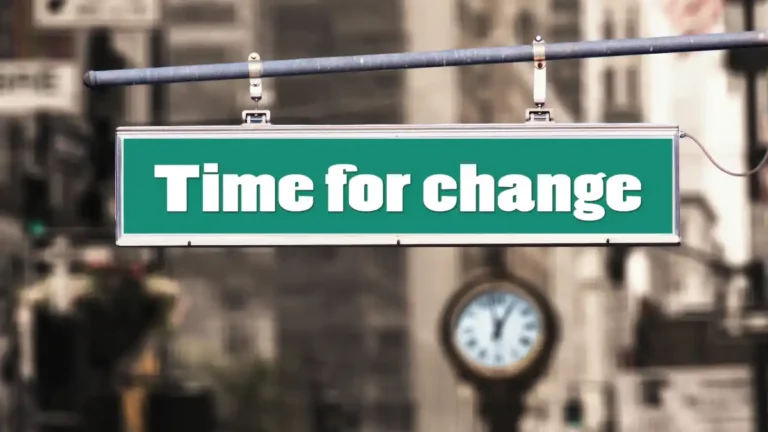
Green street sign reading “Time for change” suspended above a blurred urban street with a clock visible in the background.

We dream of reform because it flatters us. It casts us as sculptors of history rather than bystanders in entropy. But large systems do not repent; they calcify, fracture, and reassemble. Political change is choreography. Real change is metabolic, intimate, and painful. The only structure you can meaningfully reform is the one staring back at you.
Running Two Operating Systems

A chaotic pile of colorful cassette tapes scattered and overlapping, representing analog media and fragmented memory.

Born at the hinge of history, Generation X grew up fluent in both dirt and dial-up. We learned risk before rules, autonomy before narratives, and systems before slogans. As the digital world metastasizes and begins to fail, the skills we absorbed accidentally—through boredom, neglect, and consequence—are no longer nostalgic. They’re strategic.

Hope Is the Quietest Prison

A person sitting on the floor with knees drawn to the chest, hands clasped around their legs, barefoot, conveying quiet confinement and withdrawal.

Hope, in its most popular form, is not courage but sedation. It keeps people docile, compliant, and endlessly patient while the structure rots around them. It promises meaning tomorrow in exchange for paralysis today. No whips are required. The inmates guard themselves, rehearsing grievances and mistaking endurance for virtue.

The Cult of Innovation and the Death of Usefulness

Clasped hands held together in a dark, contemplative setting, suggesting restraint, reflection, and tension rather than prayer.

We worship innovation and despise usefulness. We celebrate vapor businesses while treating plumbers, tailors, and shopkeepers as relics. This is not progress; it is decadence. Entrepreneurship is the horse, innovation the cart. Without people willing to serve real needs and carry risk, economies stagnate and societies rot—quietly, predictably, and deservedly in the end anyway.

Reality Is a User Interface

Blue butterflies hovering above a dark forest floor with small glowing mushrooms, illuminated against a blurred woodland background.

Reality no longer arrives through experience but through mediation. We inherit truths we cannot verify, trust fragments we barely understand, and call interpretation knowledge. From climate graphs to medical dogma, we mistake confidence for accuracy. The world feels real not because it is, but because our minds insist it must be.

What’s on the Box Is a Lie

A blank dark label tag attached with a white string on a light background

We no longer examine reality; we recognize it. Labels spare us the effort of thinking, metrics replace judgment, and expertise becomes a rented shield against responsibility. From contracts to medicine to markets, abstraction has become autopilot. As long as someone still digs for bedrock, the system limps along. When no one does, it collapses—always.

Becoming …

High-contrast black-and-white close-up of a human face partially obscured by dark paint or cracks, one eye sharply visible, conveying damage, endurance, and introspection.

Loss ends stories without asking permission. Careers collapse, identities dissolve, and the future stops negotiating. What remains is not hope, but choice. Not the freedom to escape circumstance, but the discipline to shape one’s interior world when nothing external will bend. Becoming begins precisely there, in the quiet after ruin.

The Coward’s Cloister

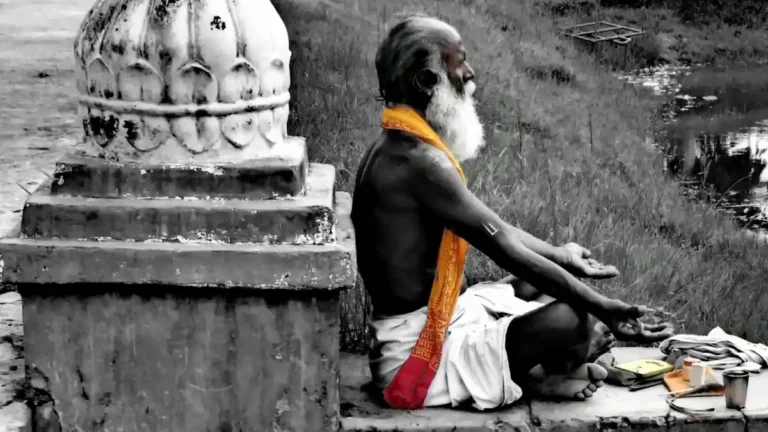
Elderly man sitting in meditation by a riverside shrine, draped in a vivid orange cloth amid a monochrome landscape — symbol of solitude and contemplation.

We tell ourselves we need peace and quiet — but the real noise is internal. You can retreat to a mountaintop or delete every app, and still hear the echo of your own unresolved idiocy. Solitude doesn’t save you from fools; it merely introduces you to the loudest one — yourself.

The Applause Is a Lie

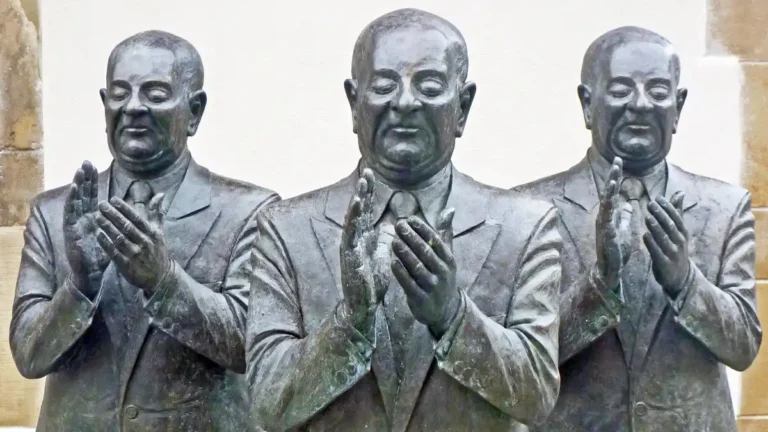
Bronze statues of identical men in suits clapping, symbolizing conformity and empty applause.

Applause is sugar water for the soul — sweet, empty, and fattening. It feels like food but feeds nothing. The more you taste it, the more it owns you. Build for yourself, not for the crowd. Because when the theater goes dark and the cheering stops, you’ll face one audience only: the mirror.

The Cult of the Manager

Hyenas and vultures feeding on the carcass of a large animal, surrounded by dry, rocky terrain.

When Orwell warned us about totalitarian control, he imagined boots and banners. What he missed was the spreadsheet. The tyranny arrived in ergonomic chairs, bearing KPIs and ESG reports. Our new Inner Party doesn’t torture dissidents; it audits them. The manager has replaced the priest, the king, and the tyrant—and we call it professionalism.

The Gospel of Fear

Dark, fog-covered forest at night, illuminated by faint blue light, evoking fear and isolation.

We haven’t outgrown witch hunts—we’ve digitized them. The bonfires are online, the sermons televised, the priests replaced by experts clutching data instead of crosses. The liturgy is unchanged: fear the unseen, obey the herd, trust the medicine. And in that obedience, we trade our last wild freedom for the comfort of calm.

The Lost Art of Doing Nothing

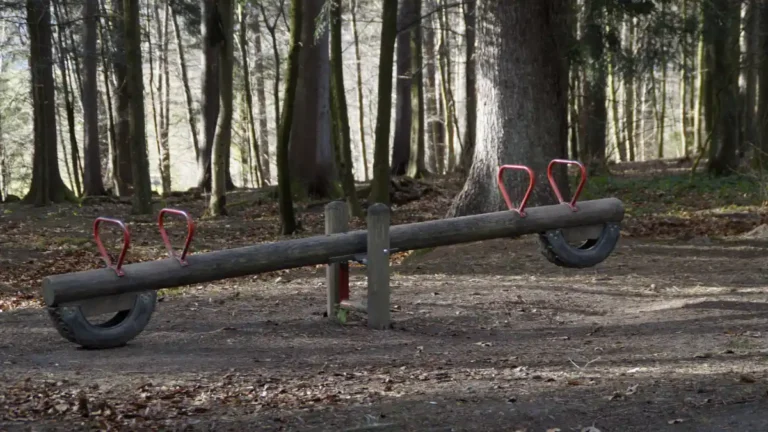
A wooden seesaw with red handles stands motionless in a forest clearing, surrounded by tall trees and filtered sunlight.

We’ve mistaken movement for meaning. The world twitches, scrolls, reacts—convinced that perpetual motion equals life. But the quiet, the pause, the refusal to dance to the algorithm’s drum—these are now acts of rebellion. To stop moving is to start seeing, and nothing terrifies the modern mind more than the possibility of stillness.