
The Soviet Energy Machine and the Economics That Can No Longer Sustain It
The Inheritance Without a Balance Sheet
Russia’s standing as an energy superpower rests on an industrial inheritance that was never born in the marketplace.
The oil fields, gas giants, trunk pipelines, compressor stations, refineries, export terminals — much of this steel anatomy was assembled under the auspices of the Soviet command system. Whatever one thinks of that system — and history offers no shortage of reasons to think poorly of it — it was capable of executing colossal projects in hostile terrain. It could marshal engineers of genuine brilliance. It could mobilize manpower at continental scale. It could pour concrete and weld pipe across tundra with a stubbornness bordering on metaphysical defiance.
What it did not do was calculate.
There were no investment committees debating internal rates of return. No net present value spreadsheets adjudicating capital allocation. No shareholder pressure demanding efficiency. Labor was not priced as it is in market systems. Environmental compliance was not a variable to be optimized. Strategic will eclipsed financial discipline.
Human suffering, when required, was simply absorbed as an unpriced input. Political command replaced capital markets.
The result was infrastructure that existed outside conventional accounting logic. When the Soviet Union collapsed, that infrastructure did not evaporate. It merely lost the ideological ledger in which it had once been justified.
What remained was hardware — massive, functioning, real — but stripped of its original economic narrative.
It was, in effect, an inheritance without a balance sheet.
Pipelines already spanned frozen wasteland. Giant reservoirs had been tapped. Refineries stood like industrial cathedrals. Their development costs had dissolved into a vanished system. In market terms, they appeared as sunk cost relics — free assets.
Western Europe treated them accordingly.
Gas flowed westward. Contracts were signed. Policymakers spoke of “interdependence.” Utilities built business models around molecules arriving reliably from Siberia. The implicit belief was that Russia possessed not merely reserves, but a self-replicating energy machine.
But what was built without economic constraint cannot be effortlessly rebuilt within one.
That is the structural flaw at the heart of the petro-empire.
The Giants That Paid for the State
For decades, a small number of super-giant gas fields underwrote Russia’s export revenues.
Urengoy and Yamburg — developed during the high tide of Soviet industrial ambition — supplied Europe for half a century. They operated under reservoir pressures that made extraction comparatively straightforward and, once the political cost of development had been absorbed, astonishingly lucrative.
These fields were geological windfalls married to political will.
But gas reservoirs obey physics, not ideology.
Oil fields can linger. When natural pressure wanes, engineers inject water, gas, or CO₂. Pumps descend. Margins thin, but barrels continue to trickle upward. Oil has an afterlife.
Gas is less forgiving.
Gas production depends directly on reservoir pressure. When that pressure declines significantly, output falls swiftly. There is no equivalent decades-long epilogue. Terminal decline, once initiated in super-giant gas fields, can compress timelines dramatically.
Industry professionals have long understood that the Soviet-era giants were aging. Debate centered on timing, not trajectory.
What ultimately governs is not geopolitics but geology.
Cheap Russian gas was never a permanent climatic condition over Europe. It was the harvest of fields developed under non-market conditions and sustained by favorable reservoir physics. Both advantages were finite.
As the giants fade, the inherited cost advantage fades with them.
The Arctic Mirage
Russia’s subsurface wealth is not exhausted. The Yamal Peninsula, the Kara Sea, the Barents Sea — the maps remain colored with vast reserves. On paper, they are impressive to the point of seduction.
But paper reserves are geological facts. Economic reserves are financial judgments.
The next generation of Russian hydrocarbon development lies further north, deeper into cold and distance. Infrastructure must be built across permafrost that shifts and heaves. Steel must endure violent temperature gradients. Supply chains extend across thousands of kilometers of sparsely inhabited land and ice-choked waters.
Everything costs more in the Arctic. Everything takes longer.
Reliable figures on true Russian upstream development costs are elusive. Russian corporate transparency resembles reinforced concrete — opaque and structurally immovable. The cultural habit of reporting only good news up the hierarchy does little to clarify reality. Even senior management may not possess a precise understanding of full-cycle economics.
As for legacy southern fields, they were developed decades ago under a system where secrecy was reflex and cost discipline optional. Estimating their real historical cost is an exercise akin to divining wind direction with a damp thumb.
Comparisons to Western Arctic projects offer limited guidance. The global appetite for high-cost polar hydrocarbons was far greater in an era when oil regularly flirted with or exceeded USD 100 per barrel and before shale production imposed structural price discipline on the market. Those conditions have shifted. Alternatives exist. Capital has choices.
At today’s inflation-adjusted price levels, many Arctic projects strain credibility. Even materially higher prices would leave margins thin relative to risk.
The Soviet system knew about the Arctic. It deferred it. Easier, cheaper reservoirs were exploited first. The far north was held in reserve — perhaps for a future of permanently high prices or miraculous technological breakthroughs that would tame its hostility.
That future may never arrive.
The myth of eternally cheap Siberian gas depended on geology married to sunk cost. The Arctic depends on full-price capital.
The two are not interchangeable.
Megaprojects, Prestige, and Incentives
And yet, in the post-Soviet era, Russia pursued enormous pipeline projects and Arctic developments.
Why embark on such ventures if the economics are fragile?
Large export projects are typically financed through long-term offtake agreements. Buyers commit — often for decades — to purchase specified volumes. These future cash flows underpin project finance. Banks lend. Steel is ordered. Construction begins.
In systems where political power and economic authority intertwine, such megaprojects also generate opportunity. Budgets measured in tens or hundreds of billions create generous margins for inefficiency, discretion, and rent extraction. The line between national strategy and private enrichment can blur.
Prestige compounds the incentive. To be perceived as an indispensable energy power confers geopolitical leverage. Appearances matter — sometimes more than margins.
In this environment, discounted cash flow analysis is not the sole arbiter of decision-making.
But megaprojects come with liabilities. Gas export systems require enormous capital commitments — for upstream development, processing, transport, and long-distance pipelines. Financing structures mitigate two central risks: volume risk and price risk.
Volume risk is often addressed through “take-or-pay” clauses: a creditworthy buyer commits to purchase agreed volumes regardless of short-term demand fluctuations. Price risk is managed through formula-based pricing mechanisms. The symmetry is deliberate. The buyer must take or pay; the seller must deliver or compensate.
When gas deliveries through the Nord Stream pipelines ceased, contractual tensions escalated. When the pipelines were subsequently destroyed — an event still politically and legally contested — the landscape shifted. Claims of force majeure altered the liability equation. Long-term commercial obligations became murkier.
For decision-makers confronting deteriorating economics, the disappearance of infrastructure can transform the balance sheet.
This observation does not require conspiracy theory. It merely requires recognition that in large state-linked projects, incentives extend beyond textbook profitability.
When prestige, finance, and political survival intersect, steel can be laid even when arithmetic objects.
Geography as Structural Penalty
Beyond the Arctic coastlines, Russia retains hydrocarbon potential in its eastern territories.
But geography levies its own tribute.
Fields are scattered across immense, sparsely populated expanses. Gathering systems must knit together distant wells. Roads are scarce. Housing, medical facilities, telecommunications, and supply depots often require construction from scratch. Seasonal thaw turns terrain into unstable mire. Permafrost complicates foundations. Bridges across wide rivers become engineering epics.
Distance is cost.
Isolation is cost.
Climate is cost.
In contrast, development in regions such as the Permian Basin or the Bakken formation unfolds within a dense web of existing infrastructure — highways, railways, service companies, labor markets, financial institutions. Even remote U.S. basins benefit from a surrounding civilization that absorbs logistical friction.
Eastern Russia offers no such cushion.
Infrastructure there is not incremental enhancement. It is foundational capital expenditure.
Over time, these structural penalties accumulate.
Modern Constraints
Should legacy infrastructure degrade beyond recovery, rebuilding requires conditions Russia struggles to satisfy simultaneously:
Hard currency financing.
Advanced drilling and reservoir management technology.
Specialized materials capable of surviving Arctic extremes and high-paraffin flows.
Stable access to global capital markets.
Credible long-term price assumptions sufficient to justify multidecade investment horizons.
Sanctions complicate access to Western technology and capital. Domestic substitutes cover certain areas, but gaps remain — particularly in advanced subsea systems, liquefied natural gas technologies, and sophisticated reservoir management.
Chinese suppliers provide equipment in some categories, yet they do not uniformly replicate Western performance standards.
None of this renders development impossible.
It renders it slower, more expensive, and more fragile.
Under such constraints, projects advance only when prices are both high and perceived as durable.
That has not been the defining characteristic of the past decade.
Fragility and Irreversibility
Decline rarely announces itself with fireworks.
More often, it arrives as deferred maintenance.
Many Siberian oil fields produce crude with high paraffin content. As long as flow remains continuous, wax accumulation is manageable. When pipelines shut or refineries idle for extended periods, flow ceases. Wells can clog. Equipment can freeze. Restarting becomes technically intricate and economically dubious.
Layer upon this:
Damage to export terminals.
Reduced tanker availability.
Drone strikes targeting infrastructure.
Sanctions limiting access to replacement components.
A temporary interruption can harden into permanent decline.
For years, analysts forecast oil prices returning decisively above USD 100 per barrel. Wars erupted. Sanctions multiplied. Geopolitical tensions flared. Yet sustained triple-digit pricing has remained elusive.
If prices do not rise sufficiently and persistently, marginal production will not justify resurrection.
Under prolonged strain, domestic consumption could in time approach or exceed economically viable production in certain regions. A country long defined by surplus export capacity could face narrowing margins.
This transformation would not occur overnight. It would unfold gradually — a contraction of export volumes, a recalibration of fiscal expectations, a quiet reshaping of political options.
A petro-state dependent on expanding hydrocarbon surplus becomes something else when expansion ends.
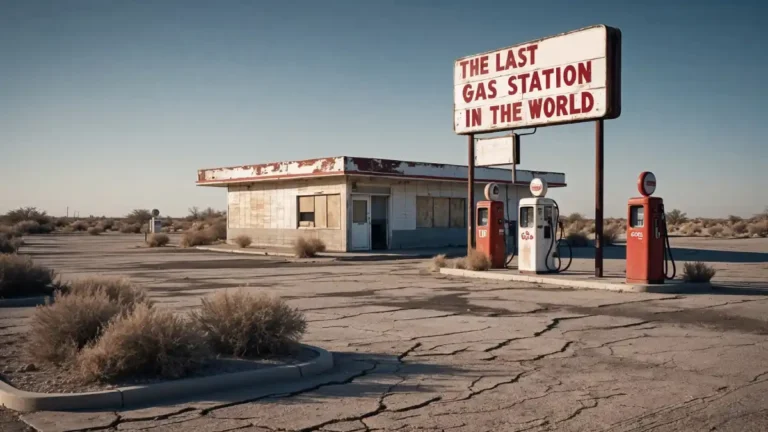
The Slow End
Empires sometimes implode spectacularly.
Energy systems usually do not.
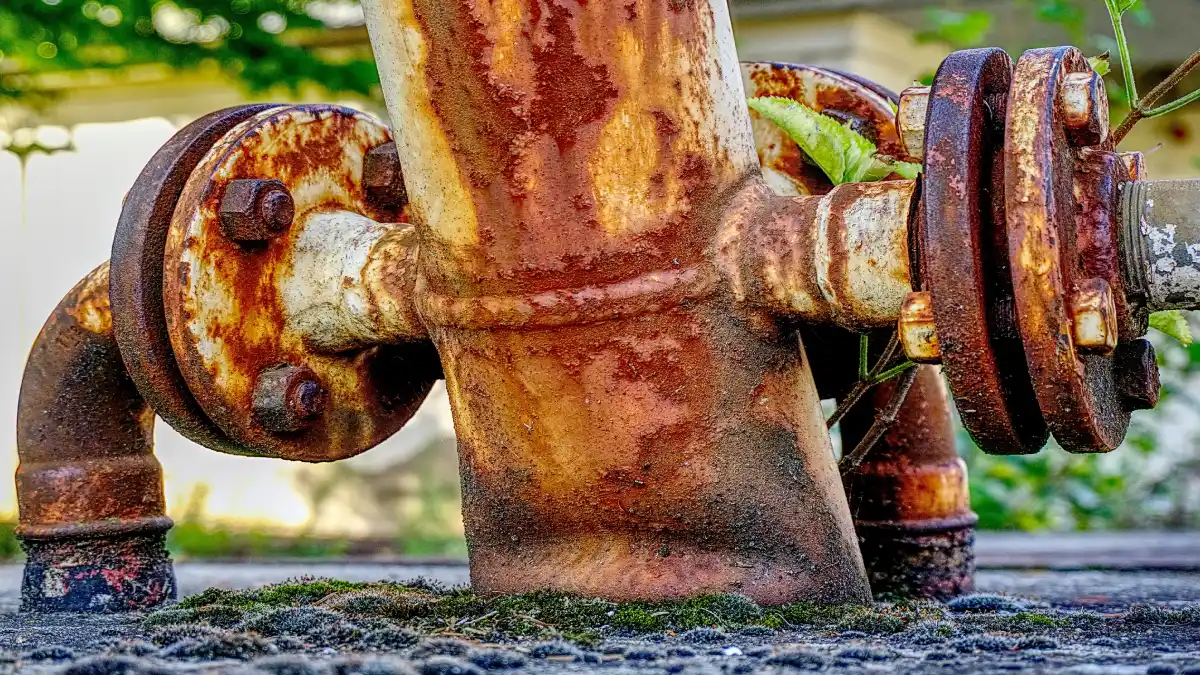
They corrode.
Reservoir pressures decline.
Maintenance budgets shrink.
Skilled labor emigrates.
Capital hesitates.
The Soviet Union constructed an energy apparatus unconstrained by market logic. Post-Soviet Russia inherited it and converted it into revenue.
But inheritance is not renewal.
If rebuilding must occur within the disciplines of global capital, much of what once existed cannot be recreated at comparable scale or cost.
The twilight of a petro-empire need not involve revolution.
It may arrive quietly.
Not with a bang.
With rust.