
What happens when the life you build is not the life you once imagined—and turns out to be yours anyway.
Before the Ladder
My father lived a life that now feels almost impossible to imagine. He grew up during the Second World War. He remembered the Nazis, the fighting in Vienna, the death of his brother, and the ten years of Soviet occupation that followed. Then he escaped into the wider world, first as a sailor, later as a travelling craftsman, before eventually returning to Vienna to build a family.
My childhood unfolded beneath the long shadow of those stories—tales of distant countries, mysterious cultures and customs so wonderfully strange that they sounded almost mythical.
I was enthralled.
Ever since I learned what a map was, I knew I wanted to become an adventurer. Like my father, only more deliberately. My father was never truly an adventurer in the romantic sense. He responded magnificently to the tides of history, but he followed the currents rather than charting them. His life was shaped by the winds.
I wanted intention.
My imagination was crowded with Allan Quatermain, Phileas Fogg, Odysseus and Sinbad, alongside real explorers like David Livingstone, Freya Stark and Thor Heyerdahl. I devoured every story I could find. I wanted my life to be built around that ethos.
Years later, when someone asked what I imagined retirement would look like, my answer surprised them.
A small Polynesian island.
A few chickens.
Some coconut trees.
A quiet community.
My memories.
No riches. No status. No prestige. No impressive titles to be engraved onto polished brass.
Just peace.
I was sixteen when those images settled permanently into my mind. I had no real plan for getting there, but I knew one thing with absolute certainty.
I did not want to wait.
I knew I would need money. Not very much—I had always lived absurdly frugally, mentally dividing every dollar into ten before spending a cent—but living cheaply is not the same as living freely. Freedom still carries a price tag, and I had no expectation that anyone else would pay it for me.
After a few short-lived jobs and completing my mandatory military service at seventeen, I applied to serve as a United Nations Blue Helmet. My first deployment took me to Syria.
That became the financial foundation of the life I wanted.
I was set up.
More importantly, I slowly became the person I wanted to become.
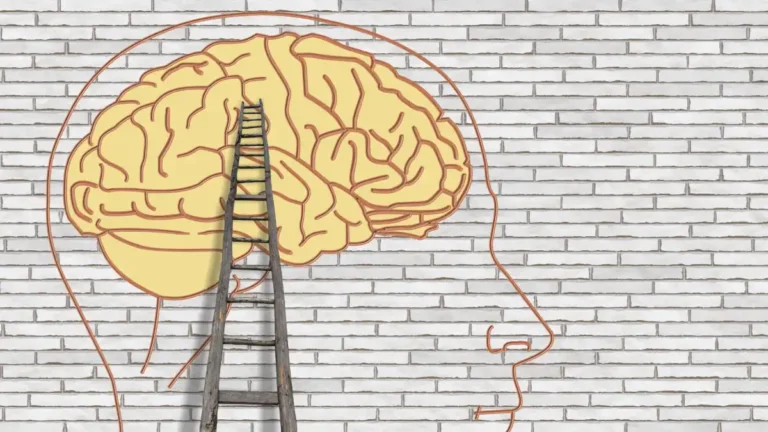
It was never an act of rebellion against conventional success. The corporate ladder simply held no attraction for me. I wanted my own ladder—one that required no audience and no applause.
Perhaps that is no ladder at all.
I imagined crossing oceans on cargo ships, backpacking through every country I could reach, sleeping in anonymous hostels, learning improbable languages and working whatever odd jobs presented themselves, stretching the savings from five tours in the Middle East and a year spent protecting a Saudi prince in Egypt just a little bit further.
I found myself in situations so absurd that nobody would have believed them had I not returned with the scars, the photographs and the stories.
Then I disappeared again.
It was a good life.
I was also spectacularly naïve.
Eventually, life intervened.
Along with a rather inconvenient quantity of hormones.
Life Happens
Reality did not arrive as a tragedy.
It arrived as a love story.
I followed a girl to Paris.
I learned French, figured out how to survive in a foreign city, earned money as a tourist guide and eventually fulfilled the second dream that had accompanied me since adolescence.
I went to university.
Law seemed like a sensible choice. I imagined it would help me understand how systems worked.
That assumption has aged remarkably well.
The years passed. I emerged with a Master’s degree while my adventures quietly migrated into the background. Somewhere along the way I accepted a corporate position negotiating natural gas supply contracts with suppliers across the Middle East and North Africa.
A few years later I was managing a department.
Business-class flights replaced overnight buses.
Conference stages replaced hostel common rooms.
Instead of bargaining over cheap accommodation, I negotiated projects and contracts worth hundreds of millions.
Whether intentionally or not, I had climbed onto the ladder.
An unusual climber, certainly. I never quite accepted the established rules, yet I played the game all the same. Opportunities appeared. Promotions followed. Doors opened.
From that vantage point, the ladder looked intoxicating.
People believed in me.
I believed in me.
I married. We had children. Money arrived. Dreams evolved.
None of it felt forced.
None of it was bad.
Quite the opposite.
Every decision made perfect sense when I made it.
Nobody kidnapped me into adulthood.
Nobody held a gun to my head and demanded I abandon the dreams of my youth.
I walked willingly.
And I enjoyed the journey.
The Seduction
I was never chasing money for its own sake.
Money mattered, of course. Discovering that I no longer had to calculate every purchase three times before committing to it felt almost luxurious. Yet money itself was never the destination.
I was chasing a better version of myself.
Gradually, an image of my future emerged.
I liked him.
He no longer lived on a Polynesian island raising chickens. Instead, perhaps he owned a house overlooking the French Mediterranean. He was competent. Successful. Respected. Trusted. Desired.
The ladder never merely promised income.
It promised identity.
And for quite some time, it delivered.
The reasons are almost embarrassingly simple.
Biology.
Look at the animal kingdom. Mammals will do, since humans belong to that rather unruly family. Males compete. Most never reproduce. A relatively small number pass on their genes.
Competition is written into the operating system.
Human males remain wired for precisely that struggle, even if modern civilisation has redirected it into office politics, stock options and prestige careers rather than tusks and antlers.
Empires have fallen because men fought over women.
Helen of Troy merely happens to be the version that made it into literature.
Female mammals operate according to a different logic. They compare. They seek partners capable of giving their offspring the greatest chance of survival.
Among animals, this makes perfect sense.
Within modern civilisation, it creates distortions every bit as fascinating as those produced by male competition.
None of this requires dark conspiracies.
None of it requires shadowy elites pulling invisible strings.
It simply requires evolution.
These behavioural patterns are vastly older than civilisation itself. Older than Homo sapiens. Older than primates. Older than mammals.
They are evolutionary software written over hundreds of millions of years.
Civilisation is perhaps five thousand years old.
Modern civilisation scarcely two hundred.
Biology has not had time to install the update.
Civilisation merely changed the symbols.
The warrior became the executive.
The hunter became the entrepreneur.
The respected elder became the LinkedIn thought leader.
The village beauty became the influencer.
The instincts remained.
Only the costumes changed.
If you now conclude that humans are little more than biological machines, you would be mistaken once again.
We possess agency.
We can observe ourselves.
We can understand our impulses.
We can dissect them.
We can change course.
Biology is not our master.
It is simply an undercurrent.
Always present.
Never silent.
Impossible to bargain with.
Impossible to switch off.
Yet entirely possible to understand—and occasionally to ignore.
Doing so requires effort.
Not Herculean effort.
Just enough that most people decide it is easier not to bother.
Like dieting while surrounded by desserts.
The temptation never disappears.
It merely whispers.
Always.
The Mirror
You may imagine that somewhere along the way I became someone else.
Someone I never intended to become.
Again, that would be the wrong conclusion.
No dark force dragged me onto the corporate ladder.
I climbed it.
Deliberately.
I genuinely admired the person I was becoming.
The strange part was that I was admiring someone who would have been almost unrecognisable to my twenty-year-old self.
That became obvious whenever I was expected to play the game completely.
Because I never quite did.
Perhaps that was my mistake.
Or perhaps it was simply the original version of myself refusing to disappear entirely.
I occupied the ladder while remaining an oddly shaped creature upon it.
Everyone knew it.
Including me.
Oddly enough, that became my greatest strength.
I could solve problems nobody else wanted.
As long as the organisation desperately needed someone comfortable with uncertainty, novelty and situations that frightened everyone else, I was valuable.
Systems do not love you.
Nor do they hate you.
They simply use whatever proves useful.
Again, there is no conspiracy hidden inside that observation.
It is merely the predictable behaviour of systems built by human beings attempting to cooperate.
Whenever something genuinely unfamiliar appeared—something awkward, messy or unprecedented—people instinctively stepped back.
I instinctively stepped forward.
That became my niche.
A friend of mine who worked as a headhunter once told me something that has stayed with me ever since.
“There are cogs, and there are levers.”
There are vastly more cogs than levers.
You never want a lever performing a cog’s job, nor a cog attempting to function as a lever.
Levers are rare.
So are the situations that require them.
Know which one you are.
Then choose the appropriate ladder.
Lever ladders expire.
Cog ladders usually do not.
I was a lever trying to imagine a permanent future inside a universe designed for cogs.
As long as the lever remained necessary, everything worked.
Once the work was done, the machinery naturally returned to cogs.
My mistake was believing I had a future on a cog ladder.
The person I had become was never fake.
He was entirely real.
Just incomplete.
The Ladder Lets Go
Eventually, the ladder released me.
I had served my purpose.
Perhaps that is the greatest gift the ladder ever offers.
It does not merely elevate people.
Eventually, it discards them.
And in doing so, it gives them an unexpected opportunity to rediscover whoever they happened to be before the climb began.
Perhaps even to construct someone new.
Someone capable of combining old convictions with present reality.
After leaving the corporate world, I still clung to fragments of that identity.
A different ladder, certainly, but recognisably related.
Consulting followed.
Fifteen years of developing projects, writing contracts and solving impossible natural gas supply problems translated surprisingly well into independent work.
It was successful enough.
Not spectacular.
Comfortable.
More importantly, it bought me something far more valuable than additional income.
Time.
Time to think.
Time to revisit old dreams.
I have no illusions about immortality.
The final third of life eventually appears on the horizon.
When it does, abandoned dreams have an irritating tendency to return with renewed determination and demand their share of your attention.
I have changed.
Time has sanded away many rough edges.
The chaotic, undefined, wild-eyed dream of my youth has not disappeared.
It has acquired structure.
Texture.
A body.
A plan.
The ladder possessed me for many years.
Looking back, I would not erase that experience even if I could.
The sixteen-year-old no longer dreams of conquering the world.
He no longer wants to collect countries like postage stamps or sprint through famous landmarks simply because they appear on somebody else’s checklist.
Now he wants something altogether different.
He wants to understand the world.