
The View from the Edge of the World
When I was a boy growing up in Austria near the eastern frontier, the other side of the world was not some abstract geopolitical concept dutifully plotted on a schoolroom globe. It was an ominous, physical hum along the horizon.
The Soviet Union and its obedient satellites sat pressed against our borders like a permanent thunderstorm. In school, our teachers mapped out the machinery of the Eastern Bloc with solemn precision. We were taught what total subjugation looked like: a society in which the state played the role of a grim schoolmaster backed by nuclear warheads. Over there, behind electrified barbed wire, ordinary people were told what to think, what to read, what to wear, how many children to have, which trade they would practice until retirement, and what meagre provisions they might find on state-managed shelves.
For us, these lessons carried visceral weight. The border was not some distant line on a map; it was a physical landmark you could reach on a bicycle before lunch. The Iron Curtain was a concrete, tangible edge where the free world simply stopped.
And then, almost overnight, history cracked open.
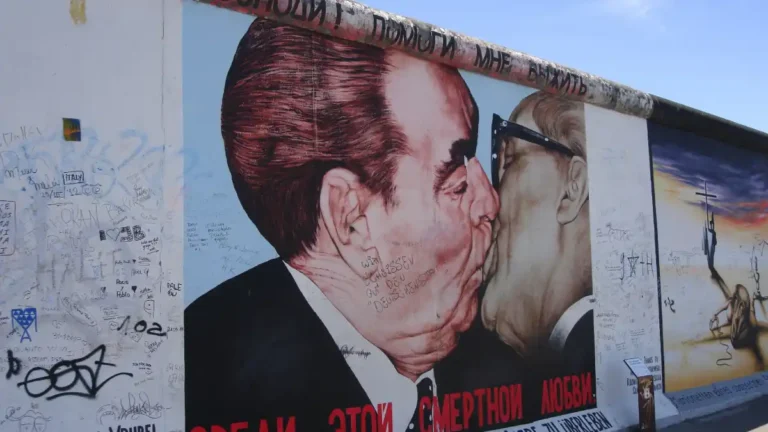
The watchtowers were abandoned, the border guards stood down, and the wall dissolved. Like countless families along that eastern margin, curiosity pulled us across almost immediately.
I still remember my father buying an entire wooden crate of bananas—a mundane, almost comically ordinary fruit in the West, but a near-mythical delicacy behind the Curtain. We drove across the newly opened border, and he began handing them out freely to the neighbourhood children. They stared at those bright yellow crescents as though they had been handed fragments of the moon.
We immediately felt like long-lost brothers and sisters returned to freedom. To me, it was personal. More than half of my ancestry hails from what is now the Czech Republic. At the time, it had been part of the Austro-Hungarian Empire. My ancestors came from Bohemia, Moravia, and Silesia. I tried to feel at home.
But it was still an utterly alien world. On the Austrian side, we never smelled the stench of lignite coal burning; just across the border, it was everywhere. Everything was grey. Not merely the brutish concrete, but the ever-present dirt. Soot clung to everything. I had always been fascinated by dystopian landscapes, and here I was getting one in more than three dimensions.
To them, that crossing was the end of isolation. To us, it felt like the final triumph of human dignity over tyranny. We truly believed—with all the innocent arrogance of the late twentieth century—that this particular species of totalitarian darkness had been permanently archived alongside ration stamps and coal-fired locomotives.
How spectacularly blind we were.
We failed to understand that tyranny does not retire. It mutates. Its uniforms change, its slogans soften, and its mechanisms adapt. The brutalist concrete watchtowers belonged to an age of industrial scarcity. The new enclosure would be forged from something considerably more insidious: unprecedented luxury, digital convenience, and boundless material ease.
The Analogue Tribe
My generation occupied a rare, fleeting hinge in human history: we were the last analogue cohort.
We were raised in a world without glowing black rectangles permanently illuminating our faces. There was no ubiquitous internet, no smartphone nestling in every pocket, no algorithm tracking our heartbeat, and no social-media apparatus carefully optimising our daily doses of dopamine, outrage, and manufactured importance.
When we were children, we disappeared into the woods for entire afternoons. We rode battered bicycles along gravel lanes, built tree forts, climbed rooftops, and vanished until dusk began settling over the landscape—summoned back to reality only when our mothers stepped onto the front porch and shouted our names into the twilight.
But it was not only the woods and the trees that occupied us. Even when we were at home, we either had to become inventive or be bored to death. We had a large box filled with an unruly collection of coloured bricks—LEGO—which we used to construct the most magnificent towers, machines, and aeroplanes our fevered little imaginations could devise. Television was limited, the screens were small, and much of what was broadcast was boring as hell.
My father was a tailor. He had to feed a family of nine, which is a feat in itself. Pocket money was sparse. It is difficult to spoil your children when there are seven of them: seven mouths to feed, fourteen hands expecting pocket money. So he became inventive. He found ways for us to earn it through little tasks in the workshop. No child labour, mind you. We liked it because it bought us parity with our schoolmates.
In that world, there was no digital audience watching our every move. There was no permanent corporate archive of our childhood stupidity. Disagreements were settled on the spot—occasionally with scraped knuckles, more often with bruised pride, but always face-to-face, and usually concluded when the sun went down.
We grew up analogue, but stepped into adulthood just as the digital landscape was being paved. That gave us an invaluable, double-sided perspective: we understood the power of the machine, but we still remembered the physical textures of self-reliance that existed before it.
The generations that followed inherited none of that baseline. They were born directly into the network. Their cognitive architecture was formed inside walled digital ecosystems governed by engagement metrics, algorithmic nudges, and perpetual social surveillance.
Worse still, they inherited liberty as an entitlement rather than an achievement. They grew up in a society that had enjoyed decades of uninterrupted peace, soaring prosperity, and almost total insulation from the raw mechanics of survival. They learned that rights could be endlessly demanded, but never learned that rights survive only when accompanied by an equal measure of personal responsibility.
They learned to speak, but never understood that freedom of speech guarantees neither applause nor agreement nor safe passage through intellectual friction. They mistook disagreement for violence and resilience for an unnecessary burden.
The Hallucinations of Paradise
There is a brilliant and unsettling moment in The Matrix when Agent Smith observes that the first simulation constructed for humanity was designed as an absolute paradise. Humanity rejected it. People died in droves because our minds could not process an existence stripped entirely of suffering.
The fiction touches something deep and evolutionary: human beings do not handle sustained, effortless comfort particularly well.
When survival pressure recedes entirely—when starvation has been banished, winter cold defeated by central heating, infectious disease subdued by pharmaceuticals, and every physical want can be satisfied by tapping a piece of glass—the human psyche does not necessarily settle into serene enlightenment.
It begins to hallucinate.
I know this from my autistic son. Deep autists are very prone to retreat into imaginary worlds when the outside world becomes relentlessly overwhelming. When they are not productively engaged, they can develop tics because the mind seeks to fill the emptiness with senseless activity. The same basic mechanism exists in every one of us. We tend to notice it in autistic people because they are medical outliers. But the underlying psychology is not exclusive to them. It affects us in much the same way; we simply do not regard it as a problem because we are not considered mentally off-standard.
Deprived of authentic external struggles against nature, modern populations begin inventing artificial emergencies. They construct elaborate metaphysical morality plays to fill the void left by conquered scarcity. A civilisation that no longer has to chop wood, haul water, or worry about foreign armies massing along its perimeter begins turning its immense, idle energy inward.
Suddenly, prosperous nations become obsessively consumed with ever more exquisitely refined forms of purity:
- Linguistic codes are meticulously audited and endlessly revised.
- Ordinary social interactions are scrutinised for invisible slights and microscopic trespasses.
- Opinions regarded as routine common sense a decade ago are reclassified as existential moral hazards.
- Public discourse hardens into a sequence of secular religious rituals in which nonconformity is treated as dangerous heresy.
The luxury of never facing genuine material danger produces an acute psychological fragility. People become terrified of friction, terrified of offence, terrified of uncertainty. Having traded away their physical calluses, they demand that the external world itself be wrapped in bubble wrap to protect their unconditioned sensibilities.
From Iron Curtains to Walled Gardens
Because our modern tyrannies emerge from abundance rather than scarcity, their methods of enforcement are almost completely inverted.
The old Soviet model was clunky, overt, and expensive. It relied on physical brutality: labour camps, concrete walls, armed checkpoints, bread lines. It had to show its teeth because it was running an economy of chronic misery.
Modern systems are considerably more sophisticated. They understand that overt violence is messy, crude, and liable to provoke unnecessary resistance. Why erect razor wire when you can persuade the population to construct its own digital panopticon?
Soft coercion accomplishes much the same submission, but with vastly superior efficiency:
- You do not need to banish a dissident to Siberia if you can simply freeze their bank access, revoke their digital payment processing, or exile them from the online town square.
- You do not need political commissars patrolling neighbourhood streets when a mob of self-appointed social-media inquisitors is eager to destroy someone’s employment prospects for sport.
- You do not need secret police knocking on doors when citizens voluntarily carry GPS trackers, microphones, cameras, and behavioural telemetry devices everywhere they go.
The most insidious feature of modern control is that it arrives dressed not in the terrifying regalia of a conqueror, but in the soothing, maternal language of therapeutic care.
Coercion is no longer sold under the banner of state supremacy. It is marketed as “public health,” “content moderation,” “community safety,” “inclusivity,” and “sustainability.” The modern soft tyrant does not demand that you obey him. He tearfully explains that he is restricting your movement, censoring your speech, and policing your habits entirely for your own protection.
About ten years ago, we had a family reunion. We had them more than once a year: low-key affairs, usually meeting in a restaurant with my parents, my siblings, their spouses, and the children. I arrived with my own family in tow, and when I entered the restaurant, my father informed me that I had a little belly.
I told him he had a problem with his eyesight, because that was not a little belly. That was some serious lard.
My sister’s husband asked me whether I had a problem with being called fat. I said no, because it was true. I was fat then. There was no reason to be offended by a fact.
He is a high-school principal, and he told me that this would be unacceptable today. He was genuinely amazed that I had not been offended.
He is my generation.
The poison has spread.
Many of us have become snowflakes.
This linguistic sleight of hand makes resistance psychologically excruciating. When an armed soldier tells you to kneel, disobedience feels heroic. But when an administrative committee informs you that your scepticism is endangering your grandmother, nonconformity is made to feel selfish, sociopathic, and cruel.
The public eagerly trades away genuine freedom because it has been convinced that freedom is simply too dangerous, too messy, and too exhausting to maintain. They want fire without heat. They want a painless existence without risk. And to obtain it, they gladly hand the keys to their lives over to an administrative elite that promises to manage the weather.
The Inevitable Collision with Reality
Yet history contains a stubborn and recurring law: reality cannot be permanently legislated away.
A society can insulate itself inside an artificial bubble of comfort and ideological indulgence for decades, provided the capital reserves accumulated by previous generations hold out. But the physical world remains utterly indifferent to our moral delusions.
Eventually, the ledger must balance.
The soft tyrannies built upon abundant comfort inevitably collide with hard material constraints:
- Energy networks fail when fantasy policies encounter basic thermodynamics.
- Economies falter when monetary expansion outruns the actual production of real goods.
- Social cohesion splinters when a population that has forgotten how to handle disagreement turns upon itself in ideological cannibalism.
- Geopolitical borders crumble when nations that surrendered their martial vigour encounter adversaries who still respect raw strength.
We are watching that collision unfold now. The long holiday from history is drawing to a close. The economic, geopolitical, and resource pressures that modern Westerners dismissed as relics of a barbarous past are reasserting their dominance with quiet, unhurried ferocity.
This is not the end of the world. It is simply the historical pendulum swinging back from excess toward discipline. Civilisations rarely regain their sanity through philosophical epiphany. More often, they regain it through the cold, restorative slap of reality.
When life becomes demanding once more, the artificial hysterias of the comfortable evaporate. Populations softened by decades of easy luxury will either rediscover the hard, pragmatic virtues of self-reliance, physical resilience, and genuine agency—or they will be ground to dust beneath the wheels of forces that have never cared about their feelings.
Freedom was never intended to be an unbroken, effortless carnival. It is a severe, high-maintenance discipline meant for adults willing to accept the weather, carry their own packs, and look the world squarely in the eye without demanding an escort.
The soft prison of comfort is cracking.
The only question is whether we still remember how to breathe the cold, bracing air outside the fence.