
Once upon a time, I had a friend. Yes, he died a few years ago, which is why I speak of him in the past tense. Death remains inconveniently definitive that way.
He was an ardent believer in democracy. Not merely democracy, but its most radical incarnation: direct democracy. A popular vote, he believed, would be the solution to virtually every ill we had witnessed in our lifetimes. The anatomy of any governmental system, however diseased, would apparently heal itself the moment the population was handed a ballot and told to choose wisely.
A charming theory. Almost adorable.
And let’s be honest: the last twenty years have been a rather awkward period for such faith. The great financial collapse of 2008 is now almost two decades behind us, and the rut has become deep enough for even the most ferocious optimists to lower their expectations from “the future is magnificent” to “well, at least the supermarkets are still open.”
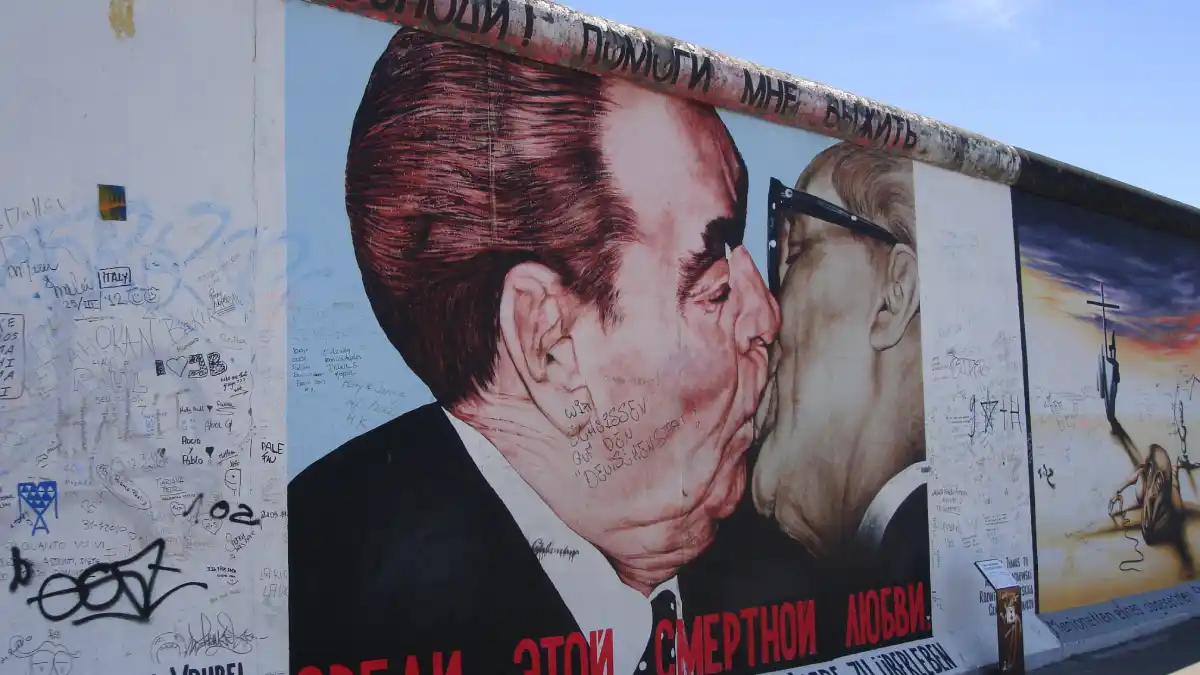
When I was a child, we were sold a world of liberty: open borders, democracy everywhere, freedom marching triumphantly across the globe, particularly after the Red Empire finally collapsed.
The ideological product launch was magnificent.
Does it feel that way to any of you now?
Not to me.
My friend held on to his beliefs until his last day. He took them into the grave with him. Democracy is no more a solution to everything than it is the problem itself. It is no universal solvent. It is often not even a cure.
It is, at times, merely the respectable-looking disease.
He died deeply unhappy, which may say something about the hazards of fastening oneself too tightly to a belief system. Reality has a rather unpleasant habit of refusing to honour our emotional investments.
Dropping the Pretense
Are we dropping the pretense now?
Is that finally where this conversation is allowed to go?
Because in civic theory—and clean theory is about all democracy has ever truly possessed—the premise is disarmingly simple: the citizens decide.
Not permanent secretariats. Not insulated committees of certified experts. Not advisory panels meeting behind mahogany doors to determine which truths are sufficiently respectable to be released into daylight.
The voters.
That messy, inconsistent, occasionally ill-informed, perpetually inconvenient aggregate that nonetheless possesses the solitary moral authority giving the entire apparatus its name.
In theory, that authority is sovereign. Laws can be drafted, repealed, or rewritten. Constitutions—those secular scriptures we solemnly worship in public squares—can be amended, reshaped, or discarded entirely, provided enough minds can be persuaded over sufficient time.
Structures that appear to have been carved into alpine granite turn out, under genuine pressure, to be made of wax.
Nothing is cast in iron.
That is the grand promise.
It is also the fatal flaw.
The moment an institutional class begins arguing that the electorate cannot be trusted—that particular emergencies are too intricate, the geopolitical landscape too delicate, or public health too consequential to be left to the unwashed masses—they are not merely disputing an undesirable election result.
They are quietly disabling the mechanism itself.
Once you set foot on that path, retreat becomes remarkably difficult to coordinate. If the average citizen is deemed incompetent to decide what goes into his own body, what happens inside his own community, or how his own money is spent, why should he be permitted to choose his representatives?
Apparently, voting is perfectly sophisticated when you are choosing the people who will tell you what you are allowed to do. It becomes rather more dangerous when you expect the same people to obey you.
If the perimeter of permissible debate is fenced off by bureaucratic consensus, what exactly remains of the franchise?
At what point does voting cease to be an exercise of authority and become an elaborate, tax-funded ritual of compliance?
A system in which outcomes are pre-calibrated, where certain policy avenues are declared permanently off-limits regardless of public appetite, may retain all the gleaming vocabulary of Western liberalism.
It has simply traded its marrow for embalming fluid.
We have witnessed this performance before. Regimes have frequently wrapped themselves in democratic vestments while meticulously ensuring that no election could ever disturb the underlying levers of power.
The forms were scrupulously maintained.
The rubber stamps were inked on schedule.
Everyone could admire the beautiful machinery.
It just didn’t actually do anything.
The ability of the population to fundamentally steer the ship had been amputated in the dark.
Democracy in name.
A managed managerial enclosure in practice.
The Constitutional Mirage
History does not merely suggest this vulnerability.
It beats it into our heads, then apparently waits patiently while we forget again.
Popular mythology likes to remember catastrophic tyranny as something that invariably arrives by surprise: a sudden dawn coup, tanks rumbling over cobblestones, jackboots kicking down doors in the night.
It is a comforting fable because it casts the general population as innocent victims of some overwhelming, alien force.
Nobody likes to imagine that the monster might have been admitted through reception.
The truth is considerably more humiliating.
Adolf Hitler did not blow up the Weimar Republic from the outside. He operated inside its machinery. He exploited its factionalism, leveraged its economic panic, navigated its constitutional loopholes, and rode a wave of democratic legitimacy straight into the chancellery.
The system accommodated him.
The voters, directly or through their fractured representatives, opened the gates.
And once inside, his first order of business was entirely logical: dismantle the very escalator that had carried him to the summit.
Because any mechanism that allows you to ascend can just as easily bring you down.
Unless, of course, you outlaw the descent.
This is the structural paradox coiled around the root of the democratic model: it possesses the latent capacity for its own self-negation.
Subjected to the correct combination of hysteria, scarcity, and manufactured emergency, a democratic majority can cheerfully vote for the tools of its own subjugation.
Humanity, it turns out, is perfectly capable of voting itself into a cage and then arguing over whether the bars are aesthetically pleasing.
For decades, political philosophers comforted themselves with the belief that “checks and balances” had solved this problem. We built independent judiciaries, wrote human-rights charters, and established constitutional courts.
We told ourselves that these paper barriers would serve as breakwaters against the tides of mass hysteria.
They do not.
A constitution is merely ink on processed wood pulp. It possesses no infantry, no artillery, and no intrinsic willpower.
It is, in the final analysis, a strongly worded piece of paper.
When an entire administrative apparatus panics—or discovers how intoxicating it feels to rule by emergency decree—the courts do not necessarily defend the citizen.
They rationalise the state’s appetite.
A fundamental right is not a temporary concession granted by a cabinet minister for good behaviour. It is either an absolute, non-negotiable boundary beyond which the state may not tread, or it is a decorative fiction.
If a constitution permits basic bodily integrity and individual liberties to be shelved the moment somebody at a lectern declares a crisis, then you do not have rights.
You have conditional privileges.
And conditional privileges can be revoked the moment the herd gets spooked.
The Laboratory of Coercion
This ceased being an academic exercise for me when the emergency arrived at my own front door.
I live in Austria with my family. We are not tourists passing through, nor foreign commentators opining from the comfortable remove of some think tank in London or Washington.
We lived through the madness on the ground.
During the virus scare, Austria earned the dubious distinction of becoming the only Western liberal democracy to legislate mandatory medical injections for every resident on its territory over the age of eighteen.
No meaningful carve-outs.
No moral exemptions.
Submit to an unproven medical intervention or face compounding financial destruction and the apparatus of criminal enforcement.
Nothing says liberal democracy quite like being told that your bodily autonomy is a privilege subject to administrative renewal.
The lockdowns were bad enough. I have a severely handicapped child, and daily walks through the city had been a ritual he loved.
Autists are beasts of habit. They want their predictable patterns. When those patterns disappear, life becomes very difficult.
But my son eventually became accustomed to the new normal.
And then, having adapted to it, he no longer wanted to leave the apartment.
The outside world had become threatening to him. So when the madness finally ebbed, we had our hands full convincing him to take a walk—or indeed to do anything at all outside our home.
Then came the mandatory shots.
Suddenly we were facing the very real possibility of having to flee our own country.
Our crime?
We were unwilling to submit to an untested medical procedure.
Apparently, this was sufficient to place us somewhere on the administrative spectrum between irresponsible citizen and potential biological menace.
The measure was eventually abandoned before it faced a fatal constitutional reckoning, but the retreat was purely pragmatic, not principled.
The institutional damage was absolute.
Something fundamental broke in my relationship with the state—and with the society around me.
I had operated under the bourgeois illusion that certain thresholds simply could not be crossed in modern Europe.
History should have cured me of that naivety long ago.
Instead, I watched federal ministers appear on live television and declare, with bureaucratic casualness, that the right to reside in Austria was not absolute—that conditions could be applied even to citizens born and raised on this soil.
I watched distinguished professors of jurisprudence argue, with perfectly straight faces, that the inviolability of one’s own bloodstream could be subordinated to an undefined, shifting abstraction called “public health.”
Think about the sheer, grotesque gravity of that proposition.
The issue was never the pathogen. Pathogens are a feature of biological existence. They arrive, do their damage, mutate, and recede.
The true horror was the speed with which an entire society collapsed into compliance.
Institutions built over centuries to restrain authoritarian overreach dissolved like sugar in boiling water.
The press, which styles itself the ferocious watchdog of power, became the state’s most vicious attack dog, baying for the exclusion and punishment of the non-compliant.
It was quite a spectacle.
The guardians of liberalism discovered that liberty was wonderful right up until somebody used it incorrectly.
Democracy, stripped of its marketing gloss and public-relations budget, is nothing more than the dictatorship of the majority.
And majorities are the easiest marks on earth.
Give them a sufficiently frightening phantom. Assure them that their panic is a form of civic virtue. Give them a minority to blame for their discomfort.
They will applaud the construction of their own cages.
They may even ask for a bigger cage.
For safety.
The Ghosts at the Dinner Table
My grandfather lived through the collapse of the Habsburg monarchy, saw the Kaiser fall, and survived the catastrophic ascent of the Third Reich.
My father was born into that same shadow. He carried the indelible memory of what human beings look like when an ideology gives them a moral hall pass to persecute their neighbours.
They belonged to generations that possessed an instinct our comfortable modern intellectual class has almost entirely lost:
They understood that tyranny never introduces itself as tyranny.
The devil does not arrive smelling of brimstone, brandishing a trident, and announcing his intention to ruin your life.
He arrives wearing an official sash, carrying a briefcase of statistical projections, and speaking in the soothing tones of collective preservation, public safety, and moral duty.
He has excellent credentials.
He has a committee.
There may even be a PowerPoint presentation.
He announces an emergency.
A unique, unprecedented crisis that requires us to set aside ordinary legal protections—just for a season, just until the curve flattens, just until the threat is neutralised.
Then the exception becomes the precedent.
The precedent becomes the routine.
The routine becomes the baseline.
And, eventually, somebody will insist that the baseline was always there.
I often wonder what my grandfather would have said had he stood beside me in Vienna during those dark months, watching armed police check health papers on street corners and listening to neighbours whisper about who had complied and who had not.
I know the answer.
He would not have been surprised.
But he would have been sickened.
He understood that the modern delusion—the arrogant belief that we have somehow evolved beyond the savagery of our ancestors—is perhaps our greatest vulnerability.
We look back at historical horrors and smugly convince ourselves that we would have stood with the dissidents. We imagine ourselves as the lone figure with arms crossed in a sea of saluting automatons.
Naturally, we all cast ourselves as the hero when the film is already over.
Yet when the modern iteration arrived, wrapped not in swastikas or red banners but in the sterile, clinical jargon of biomedical security, the overwhelming majority snapped to attention and demanded that dissenters be starved of their livelihoods.
The costumes had changed.
The instinct had not.
The Sovereignty of the Outlaw
The emergency has drifted into memory.
The decrees were quietly filed away, the rhetoric dialled down, and the politicians moved on to new theatres of distraction.
For the average citizen, the slate has been wiped clean.
They want to forget.
They want to believe it was merely a bizarre, temporary fever dream that left no lasting residue.
Naturally.
That is what human beings do with unpleasant evidence.
We put it in a drawer, close the drawer, and congratulate ourselves on having moved on.
Do not let them.
The precedent has been etched into the bedrock of institutional memory. The state now possesses the data, the blueprints, and the behavioural proof.
It knows how much pressure an advanced Western population can tolerate before it abandons its most sacred civil liberties.
It also knows that eighty percent of the public will not merely comply, but will gleefully police the remaining twenty percent for free.
A remarkably efficient arrangement.
Why employ secret police when your neighbours are willing to do the work as a civic hobby?
If freedom is to mean anything beyond an empty slogan emblazoned upon civic monuments, it must be divorced from the democratic process.
True liberty cannot be subject to a show of hands.
A majority vote should have no more power to dictate what an individual puts into his veins, what words he speaks at his dinner table, or where he travels across the earth than it has to alter the trajectory of the moon.
If an election can strip you of your bodily autonomy or your voice, then democracy is simply a soft, rotating tyranny—a lottery in which you hope your faction holds the whip this cycle, while knowing perfectly well that you will be on the receiving end of it the next.
The genius of the arrangement is that everyone gets to pretend they are free because, technically, they are permitted to vote for their preferred flavour of coercion.
Either we accept that there are individual limits so absolute that no parliamentary majority, no constitutional court, and no screaming mob can touch them—or we admit that we are merely living on parole.
I have made my choice.
I will cast a ballot in elections out of basic civic hygiene, knowing full well that voting changes the colour of the paint, not the architecture of the house.
But I will never again place my faith in the sanity of the herd or the integrity of its legal guarantees.
There can be no trust.
Because in a world ruled by panicked majorities, trust is precisely what gets you crushed.
If you wish to remain free, you must cultivate the inner posture of a sovereign entity living in an occupied country: polite, observant, self-sufficient, entirely capable of withstanding the social freeze—and permanently, unsentimentally prepared to say no.