

How digital freedom became a landscape of tribes, authorities, fools and kings.
In 2020, I did something that those who know me would never have predicted.
I followed politics.
The American presidential election was approaching. Donald Trump’s first term was drawing to a close, and even from Vienna the atmosphere felt electrically charged. I have never been a political hobbyist. I do not refresh polling websites every fifteen minutes. I do not watch debates with the enthusiasm of football fans following a championship final. Politics has never struck me as a spectator sport.
Yet that year was different.
Something in the air compelled even the indifferent to look up. It felt as though the world itself had shifted ever so slightly off balance, leaving everyone waiting to discover in which direction it would finally tip.
At the time I was still trapped in what I now recognize as a phase of intellectual gluttony. I consumed information with the indiscriminate appetite of a man standing before an all-you-can-eat buffet, confusing quantity with wisdom, breadth with understanding. I sampled everything I could find across the political spectrum, convinced that exposure alone somehow constituted education.
That was how I stumbled across a daily YouTube channel called Louder with Crowder.
It was hardly the only channel I watched, but it distinguished itself for a surprisingly mundane reason.
It was organized.
Not polished in the sterile, corporate sense. Not dressed in the immaculate aesthetics of broadcast television. It simply possessed structure. Intention. Rhythm. Every episode felt as though someone had thought carefully about what came next instead of merely hoping charisma would carry the day.
The channel had launched in 2016, at the beginning of Trump’s first presidency. During one episode Steven Crowder casually remarked on something that lodged itself permanently in my memory.
Their audience numbers exceeded CNN’s by several multiples.
A YouTube channel—a production I had discovered only weeks earlier—was attracting more viewers than one of the most recognizable news organizations in modern history.
That realization lingered long after my brief excursion into political media ended.
I soon returned to my longstanding conviction that politics is, for the most part, outside our control and that obsessing over it is little more than a sophisticated form of voluntary helplessness. Entire lives disappear into arguments over events whose outcomes the participants cannot meaningfully influence.
But one observation stayed with me.
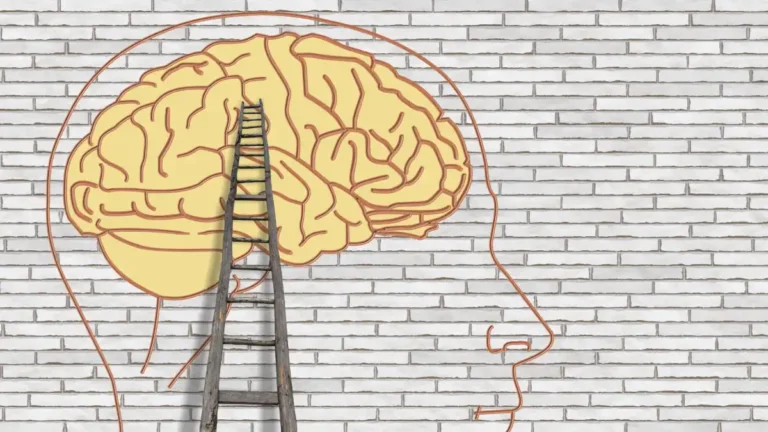
The internet had built new ladders.
Not metaphorical ladders.
Real ones.
Ladders that people could climb.
Ladders capable of transforming livelihoods, reshaping reputations and, perhaps most importantly, giving people an entirely new source of meaning.
The traditional ladders had not vanished. Careers still mattered. Status still mattered. Institutions still bestowed recognition upon those willing to dedicate decades to climbing their carefully constructed hierarchies.
Those monumental staircases remain exactly where they always stood, inviting millions to participate in the ancient game.
But digital technology altered the landscape by multiplying the available routes upward.
Suddenly, a determined individual could construct a platform from nothing, gather an audience around an idea, cultivate expertise in an obscure niche, and build an entirely new form of authority that had not existed a generation earlier.
The old world’s rulebook—the one printed neatly on paper, guarded by gatekeepers and enforced by institutions—was never simply discarded.
It was replaced by something considerably stranger.
Something largely invisible.
Something opaque.
Something algorithmic.
Something whose rules nobody could ever fully know.
The Old Ladder
For most of human history, the ladder was tangible.
You knew where it stood.
You knew who guarded it.
You knew who had already climbed it.
The castle had walls.
The army had ranks.
The church possessed a hierarchy.
The corporation displayed an organizational chart so meticulously printed that it suggested human ambition could be contained inside neat boxes connected by straight arrows.
There were only a limited number of ladders.
And because there were only a limited number of ladders, there were only a limited number of people who could climb them.
When I entered the hydrocarbon industry, I did so as a supply contracts specialist.
It was not a managerial role.
My somewhat adventurous disposition earned me an altogether different distinction. I became the man to whom management handed the problems nobody else wanted. The impossible contracts. The broken supply chains. The negotiations already assumed to be unwinnable. My colleagues and superiors expected me to fail, which would conveniently have kept me confined exactly where I was.
Unfortunately for their expectations, I had an irritating tendency to solve things.
One by one, the supposedly impossible problems disappeared.
The more impossible problems disappeared, the more uncomfortable certain people became.
Success attracts admiration from a distance.
Up close, it often attracts anxiety.
Senior management, several levels above my immediate supervisors, began noticing my work.
That was when the atmosphere changed.
One afternoon my manager’s manager invited me to lunch.
The conversation was unexpectedly candid.
He asked me not to squeeze my direct supervisor out of his position.
The request itself was revealing.
I had never intended to replace my boss. In fact, the possibility had never crossed my mind. Yet there he sat, fully convinced that every ascent necessarily required someone else’s descent. His understanding of the ladder was entirely vertical. If one man climbed, another had to fall.
What he could not imagine was that I would eventually move sideways into an entirely different management level rather than simply pushing someone off the rung directly above me.
His world permitted only one geometry.
Up.
Or down.
Nothing else.
That was the old ladder.
It was defined by scarcity.
Scarcity of opportunity.
Scarcity of recognition.
Scarcity of visibility.
Meaning came from ascending one of the relatively few hierarchies society made available: the corporate ladder, the institutional ladder, the political ladder, the academic ladder, the ladder of prestige itself.
There were few kingdoms.
Which meant everyone fought over the same throne.
The Digital Revolution
The digital revolution did not abolish the ladder.
It multiplied it.
Its great promise was freedom.
No more gatekeepers.
No more waiting for permission.
No more pleading for the approval of newspaper editors, television producers, publishing houses, universities, political parties or sprawling corporate bureaucracies before being allowed to speak.
Anyone could publish.
Anyone could build.
Anyone could gather an audience.
And, for once, the promise was largely true.
Yet humanity possesses an ancient and remarkably reliable instinct.
Give us a new freedom, and we will immediately begin constructing a hierarchy inside it.
Give people an open field and, within a year, someone will have built fences.
Give them a community and they will elect leaders.
Give them a platform and they will crown kings.
The internet did not eliminate hierarchy.
It democratized it.
Not in the sense that everyone would become equal, but in the sense that everyone suddenly had access.
The new differentiating factor was no longer family name, institutional backing or inherited position. It became something simultaneously liberating and exhausting: the willingness to do whatever the work demanded, to acquire an unusually broad collection of skills, and to keep reinventing those skills as the environment evolved.
You could build your own ladder.
But unlike the old ones, nobody guaranteed its stability.
There were no safety rails.
No pension.
No established path.
No reassuring handbook explaining what came next.
Freedom arrived without comfort.
The old world offered a handful of immense ladders that dominated the landscape.
The new world scattered millions of slender ones across the horizon.
Some reached extraordinary heights.
Most disappeared before anyone noticed they had existed.
The New Ladder
The old ladder demanded universal recognition.
Everyone needed to know your name.
The new ladder asks something altogether different.
Only the right people need to know it.
Someone with fifty thousand deeply engaged followers inside a highly specialized community may wield more genuine influence—both within that niche and occasionally beyond it—than a politician surrounded by millions of anonymous supporters who barely remember why they clicked “follow.”
The digital ladder is narrower.
But it is also deeper.
It rewards specialization.
It rewards identity.
It rewards unmistakable clarity.
Creators inside highly specialized communities are not expected to hold informed opinions on everything under the sun. Quite the opposite. Their authority often depends upon remaining inside the boundaries of their chosen territory.
The audience expects depth rather than breadth.
Outside criticism becomes almost irrelevant.
Sometimes it becomes something better.
A badge of honour.
Proof that the tribe remains cohesive.
Evidence that the identity has not been diluted.
Confirmation that the message still possesses sharp edges capable of irritating outsiders.
Identity itself becomes a professional competence.
Creator literacy becomes an economic asset.
Learning to navigate the slippery, constantly shifting terrain of public discourse becomes as essential as learning to negotiate, sell or manage people once was.
The old ladder required loyalty to a mentor.
The new ladder demands loyalty to an audience.
It does not always manufacture celebrities.
Far more often, it produces authorities.
Sometimes deserved.
Sometimes ridiculous.
Occasionally both at the same time.
The Useful Fool
This is where the modern useful fool makes his entrance.
Fools have always been irresistibly drawn toward status.
Visibility intoxicates them.
Recognition flatters them.
The digital ladder offers both in quantities previous generations could scarcely imagine.
So naturally they climb with astonishing enthusiasm.
The internet does not merely provide visibility.
It provides amplification.
It offers an almost perfect mechanism for spreading narratives, weaponizing attention and converting noise into influence.
To the fool, this is paradise.
After all, the defining characteristic of the fool is not ignorance.
It is certainty.
The fool already knows.
There are no doubts to wrestle with.
No uncomfortable questions to ask.
No self-examination to perform.
No critical assessment required.
Only a message.
Simple.
Clear.
Confident.
Utterly intoxicating.
Simple messages have always attracted audiences eager to believe them.
The village idiot suffered from an unfortunate logistical limitation.
His audience rarely exceeded the population of the village.
The global idiot enjoys considerably better infrastructure.
Even if only a microscopic fraction of humanity finds his certainty attractive, that microscopic fraction may still number in the millions.
Scale changes everything.
The underlying mechanics, however, remain stubbornly familiar.
Visibility defeats competence.
Attention outruns expertise.
Confidence routinely humiliates knowledge.
The individual who understands the algorithm often overtakes the individual who actually understands the subject.
Once upon a time, the village fool entertained perhaps thirty neighbours.
Today his successor may command the attention of three million strangers.
The old fool could ruin an evening at the local tavern.
The modern one may alter elections, destroy reputations, launch ideological movements or become spectacularly wealthy selling certainty to people desperately searching for someone willing to provide it.
The scale changed.
Human psychology did not.
Attention as Currency
Social media did something previous generations would have considered impossible.
It transformed attention itself into a currency.
And like every currency humanity has ever invented, people quickly learned how to exploit it.
Outrage became a business model.
Controversy became a growth strategy.
Permanent indignation became a viable career path.
The professional outrage merchant discovered a truth that is far older than the internet itself.
Nothing assembles a tribe faster than a common enemy.
Yet the story is considerably more complicated than that.
It would be intellectually lazy to conclude that the digital ladder rewards only stupidity.
It does not.
It rewards whatever captures attention.
Sometimes that means manipulation.
Sometimes it means brilliance.
Sometimes it means entertainment.
Sometimes it simply means that someone who would once have remained invisible has finally found the audience the old world denied them.
The algorithm is astonishingly indifferent to morality.
It concerns itself with engagement.
Human beings supply the rest.
The Fringe Finds the Fringe
The old village had a problem.
The unusual person lived alone.
The eccentric inventor.
The obsessive craftsman.
The strange thinker.
The collector fascinated by subjects nobody around them cared about.
For much of history, these people often remained isolated—not because they were wrong, but because they believed nobody else shared their peculiar interests.
Digital communication quietly dissolved that isolation.
The fringe found the fringe.
The person who wondered, Surely I cannot be the only one, suddenly discovered thousands of others asking precisely the same question.
Sometimes hundreds of thousands.
Sometimes millions.
That created something genuinely unprecedented.
Not merely communication.
Recognition.
For centuries, society appeared far more unified than it truly was because disagreement remained geographically fragmented. The majority resembled a solid mountain only because the valleys were hidden from view.
The internet revealed the valleys.
And once those valleys became visible, the mountain no longer appeared nearly as immovable.
This may be one of the most underestimated consequences of digital communication.
The internet did not create fragmentation.
It exposed fragmentation.
The fractures already existed.
Technology merely gave them microphones.
The Age of Infinite Small Kingdoms
From those newly visible fractures emerged entirely new ladders.
A person no longer needed to conquer the traditional mountain.
They could build a smaller one instead.
A mountain shaped around a particular passion.
A particular skill.
A particular identity.
A particular belief.
A particular obsession.
This is diversification in its most authentic form.
Not the carefully choreographed diversity celebrated in glossy corporate presentations.
Not the institutional version assembled by committees and communications departments.
But the gloriously untidy diversity produced by millions of human beings discovering one another and forming tribes around whatever genuinely matters to them.
Of course, tribes never remain entirely egalitarian.
Every community eventually develops status.
Every movement constructs a hierarchy.
Every gathering creates insiders and outsiders.
The rebels eventually produce their own aristocracy.
The anti-establishment slowly becomes an establishment of its own.
Even those who loudly reject status find ingenious ways to manufacture status from rejecting status.
The ladder follows us everywhere.
Because the ladder was never the institution.
The ladder was always human.
The Meaning Crisis Revisited
This extraordinary multiplication of ladders has produced a curious paradox.
On one hand, human beings now possess more opportunities than at any point in history to construct lives that feel meaningful.
On the other hand, meaning itself has become far more difficult to sustain.
The traditional ladders offered stability.
The digital ladders offer opportunity.
They also offer volatility.
The old ladders were slow.
The new ladders move at breathtaking speed.
The old ladders were guarded by institutions.
The new ladders are guarded by algorithms.
The old ladders offered an identity.
The new ladders demand one.
The internet did not merely multiply ladders.
It multiplied selves.
People now maintain multiple identities across multiple platforms, each shaped by a different audience, each governed by different expectations, each performing its own social ritual. The individual becomes less a single, coherent person than a carefully managed portfolio—a constellation of overlapping personas that expand, contract and rearrange themselves according to circumstance.
Meaning is no longer something passively inherited.
It must be cultivated.
Visibility is no longer something accidentally achieved.
It must be maintained.
Identity is no longer simply discovered.
It must be continuously performed.
The digital ladder is not merely a path upward.
It is a stage.
And every stage, sooner or later, demands a performance.
The Ladder Was Always Human
The central truth remains remarkably simple.
The ladder was never the castle.
Never the corporation.
Never the church.
Never the institution.
The ladder was always human.
Human beings create hierarchy wherever they gather.
They create status wherever they communicate.
They create meaning wherever they seek recognition.
The digital age did not fundamentally change human nature.
It revealed it.
It multiplied it.
It accelerated it.
And, perhaps most importantly, it stripped away the comforting illusion that hierarchy belonged to institutions rather than to ourselves.
We now inhabit an age of infinite small kingdoms.
Each possesses its own ladder.
Its own customs.
Its own rituals.
Its own kings.
Its own fools.
Its own prophets.
Its own heretics.
The medieval world never truly disappeared.
It simply fragmented into millions of miniature realms, all existing simultaneously inside the same digital landscape.
The question is no longer:
Which ladder will you climb?
The question is:
Which ladder will you build?