
There is something peculiar about democracy.
We defend it with the sort of emotional intensity normally reserved for religion, romantic love, and people who have just discovered that their favourite restaurant has received a Michelin star.
Question democracy, and sooner or later somebody will look at you as though you have announced that you favour smallpox.
But perhaps we should take another look at democracy without the blindfolds we so carefully wear.
The curious thing is that most people do not merely wear those blindfolds.
They will fight to keep them on.
That is what makes democracy so difficult to examine honestly.
The problem is not simply that democracy can fail to protect freedom.
The more interesting problem is that democracy gives people powerful reasons to prefer believing that it protects freedom, even when experience suggests otherwise.
And that brings us to a rather impolite question:
What if democracy survives not because it reliably delivers freedom, but because it gives people the comforting sensation that they already possess it?
That is a rather different proposition.
And considerably less flattering.
Democracy as Opium
Karl Marx famously described religion as the “opium of the people.”
I would make a different argument.
Democracy is opium for the people.
Not because democracy makes people stupid.
Because it makes them comfortable.
Religion, at least in its most familiar political interpretation, can offer people an explanation for suffering, a promise of justice, and the comforting belief that someone, somewhere, understands the larger plan.
Democracy offers something remarkably similar.
It tells you that you are sovereign.
You have a vote.
You have a voice.
You can choose your representatives.
You can change the government.
You can participate.
And because you can participate, you are encouraged to believe that you possess political power.
The distinction between participation and sovereignty is rarely examined.
That distinction matters enormously.
You can participate in a system without controlling it.
You can choose between candidates without controlling the institutions they inherit.
You can vote every four years without possessing any meaningful authority over what happens during the other 1,460 days.
You can change the occupants of the building without changing the building.
But the ballot creates a wonderfully satisfying psychological illusion.
It gives you the sensation that the machinery belongs to you.
Perhaps that is why the ballot is so sacred.
It does not necessarily make you sovereign.
It makes you feel sovereign.
And those are not remotely the same thing.
The Five-Minute Sovereign
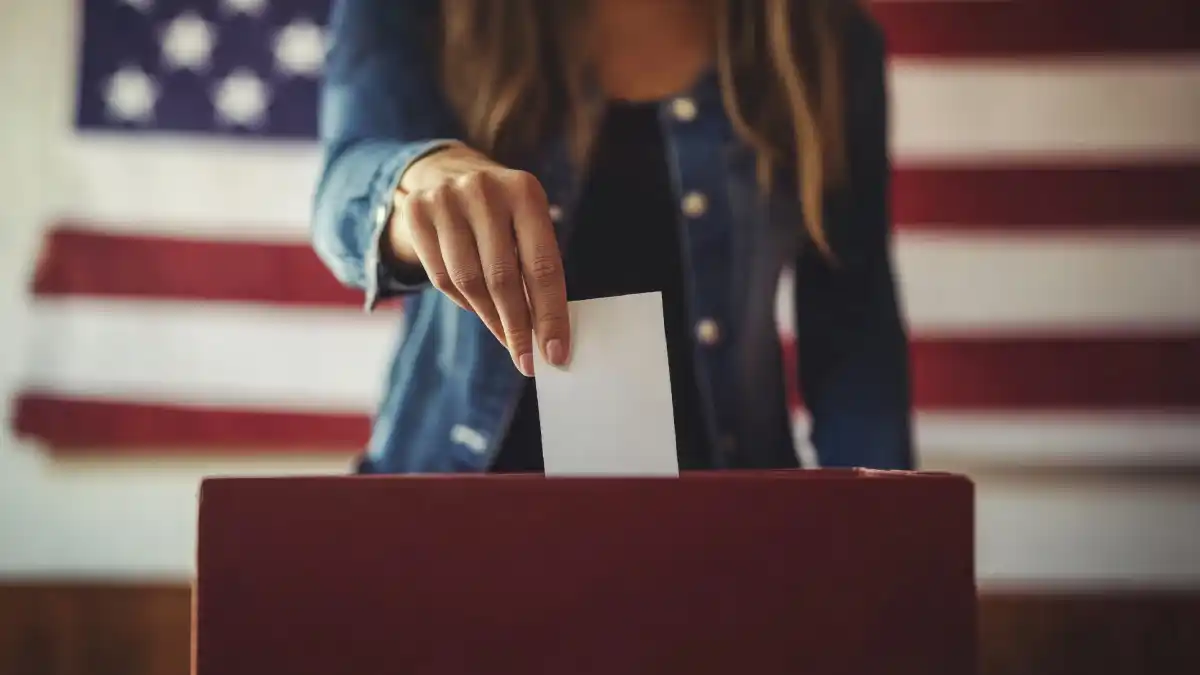
Think about what happens on election day.
You walk into a room.
You make a mark.
You place a piece of paper into a box.
And for a brief, glorious moment, you are sovereign.
You have exercised your power.
You have spoken.
You have participated in history.
Then you go home.
And the machinery resumes.
Thousands of pages of legislation.
Administrative regulations.
International agreements.
Budgets.
Tax systems.
Courts.
Ministries.
Agencies.
Committees.
Lobbyists.
Permanent bureaucracies.
Professional political operators.
You have handed your sovereign authority to somebody else and received a receipt.
The receipt is called a ballot.
And because you possess the receipt, you are encouraged to believe you still possess the merchandise.
That is the trick.
The democratic citizen is invited to confuse the ability to select rulers with the ability to rule.
Those are very different powers.
A king rules.
A dictator rules.
A bureaucrat can rule.
A citizen in a representative democracy generally does something else.
He selects, periodically, which group of people will exercise authority over him.
That may be preferable to having no choice at all.
It may even be the least objectionable arrangement available.
But let us stop pretending that it is the same thing as sovereignty.
It isn’t.
The Great Bargain
And perhaps the reason we don’t want to look too closely is that democracy offers an extraordinary bargain.
It tells the citizen:
You may have benefits without having to think too carefully about who ultimately pays for them.
Vote for this party and you will receive cheaper housing.
Vote for that party and healthcare will improve.
Vote for another and your pension will be protected.
Someone will subsidise this.
Someone will regulate that.
Someone will protect your industry.
Someone will guarantee your income.
Someone will solve the problem.
Someone will make the unpleasant consequences disappear.
And, naturally, someone else will pay.
Preferably someone sufficiently distant that you never have to meet him.
This is where democracy becomes particularly seductive.
Because people do not merely want freedom.
They want security.
They want comfort.
They want predictability.
They want protection from the consequences of their own decisions.
And they would very much prefer all of this without being told that somebody has to pay the bill.
So the political marketplace provides the obvious solution.
Promises.
Lots of promises.
Free education.
Free healthcare.
Free childcare.
Cheap energy.
Subsidised housing.
Guaranteed pensions.
Protected employment.
Compensation.
Relief.
Support.
And, presumably, unicorn piss and fairy farts to finance the whole magnificent arrangement.
The political class makes promises.
The electorate rewards the politicians who make the most attractive promises.
The politicians then claim that the people demanded the policies.
The people then claim that the politicians promised them.
And somewhere in the middle, responsibility quietly dies of natural causes.
That is the bargain.
Benefits for the masses. Power and status for the political class. Diffused responsibility for everyone.
A remarkably stable arrangement.
The Magic of Distributed Responsibility
This is perhaps democracy’s most ingenious feature.
It allows responsibility to become almost perfectly diffuse.
If I personally make a foolish financial decision, I suffer the consequences.
If a government makes a foolish financial decision, the consequences can be distributed across millions of people.
A little more taxation here.
A little more inflation there.
A little more debt somewhere else.
A little deterioration in public services.
A little erosion of purchasing power.
Nobody receives a bill marked:
You personally ordered this stupidity. Please pay here.
Instead, everyone receives a microscopic fragment of the invoice.
Small enough to ignore.
Large enough to matter.
This changes human behaviour.
When consequences are immediate and personal, people tend to become cautious.
When consequences are distant and distributed, people become remarkably generous.
Especially with other people’s money.
The individual voter can therefore demand things that he would never voluntarily finance himself.
The politician can promise things that he could never sustainably provide.
And the resulting debt can be blamed on the previous government.
Which can blame the government before that.
Which can blame the international economy.
Which can blame the bankers.
Which can blame the pandemic.
Which can blame the war.
Which can blame the weather.
At some point the bill becomes so thoroughly anonymised that nobody remembers who ordered dinner.
But everyone is certain they deserve dessert.
The Political Class Loves This Arrangement
There is an uncomfortable symmetry here.
We like to imagine politicians as manipulative predators and voters as innocent victims.
That is too convenient.
The relationship is more reciprocal than that.
Politicians offer what voters want to hear.
Voters reward them for offering it.
Politicians discover that telling people unpleasant truths is electorally expensive.
Voters discover that voting for unpleasant truths is personally inconvenient.
So the system evolves.
The politician learns not to say:
“You cannot afford this.”
He learns to say:
“You deserve this.”
He does not say:
“You will have to work longer.”
He says:
“We will protect your retirement.”
He does not say:
“Your choices have consequences.”
He says:
“The government will support you.”
This is not necessarily because every politician is evil.
It is because political systems reward certain behaviours.
A politician who tells the truth and loses is still a loser.
A politician who makes promises and wins has discovered something useful about the electorate.
The incentive structure does the rest.
And voters are not innocent either.
They know, at some level, that many promises cannot all be fulfilled indefinitely.
But they prefer the promise.
Of course they do.
The alternative is responsibility.
And responsibility is a rather expensive form of freedom.
Freedom Has a Bill Attached
This is where democracy intersects with something far more fundamental.
Freedom is not merely the right to choose.
Freedom means owning the consequences of your choices.
That is precisely why freedom is hard.
You decide.
You act.
You succeed.
You fail.
You pay.
You benefit.
You bear the consequences.
There is no magical administrative department whose job is to remove the unpleasant parts afterward.
The more capable you are of absorbing consequences yourself, the less dependent you are upon somebody else.
And the less dependent you are, the more difficult you are to control.
That is why genuine freedom can be uncomfortable.
It requires competence.
It requires discipline.
It requires reserves.
It requires accepting uncertainty.
And occasionally it requires admitting:
I made a stupid decision. Now I have to live with it.
Democracy can soften that relationship with consequence.
Not necessarily by design.
But structurally.
It creates a mechanism through which citizens can continuously demand protection from consequences while simultaneously believing that they remain autonomous because they can vote.
That is a remarkably effective anaesthetic.
You are told:
You are sovereign.
You are then given a government.
The government solves things for you.
You become dependent upon the government.
You vote for the government.
And because you voted for it, you conclude that the dependency must somehow be an expression of your freedom.
That is the trick.
The Anaesthesia of Participation
Perhaps this explains something that has always fascinated me.
People who possess remarkably little control over their own lives can nevertheless become extraordinarily passionate about politics.
They argue about elections.
They fight over parties.
They rage about presidents and prime ministers.
They spend hours discussing political personalities.
They wear campaign merchandise.
They defend politicians they have never met.
They celebrate election victories as though they personally had conquered a neighbouring kingdom.
And yet their actual ability to determine the structure of their own lives may remain almost unchanged.
The ritual is emotionally satisfying.
Because participation feels like power.
And feeling powerful is often enough.
This is where democracy becomes an anaesthetic.
It allows the citizen to believe that the fundamental struggle for freedom has already been won.
The tyrant is gone.
The secret police are gone.
The king is gone.
You have a ballot.
Congratulations.
You are free.
Except that the boundaries of permissible action may still be determined elsewhere.
Your economic dependence may still be enormous.
Your ability to refuse institutional demands may still be limited.
Your privacy may still be conditional.
Your movement may still depend upon administrative permission.
Your livelihood may still depend upon compliance.
Your ability to resist the majority may still be almost nonexistent.
But none of that matters quite as much because you can vote.
The ritual has been completed.
The anaesthetic has taken effect.
The Majority Does Not Need to Hate You
There is another uncomfortable feature of this arrangement.
The majority does not need to hate you.
It only needs to outvote you.
This distinction matters.
We instinctively imagine oppression as something deliberate.
Somebody wants to hurt you.
Somebody has identified you as an enemy.
Somebody has designed a system specifically to crush you.
Sometimes that happens.
But most of the time, something considerably more banal is sufficient.
The majority simply wants something.
And you happen to be standing where the majority’s desire lands.
That is enough.
A majority can vote for a tax that destroys your business.
A majority can vote for restrictions that prevent you from doing something you consider essential.
A majority can vote to regulate your speech.
A majority can vote to restrict your movement.
A majority can vote to transfer your property.
The individual does not have to be hated.
He merely has to lose.
That is the brutal elegance of majority rule.
The system can remain perfectly democratic while treating the individual terribly.
No conspiracy required.
No secret room.
No villain required.
Just arithmetic.
Fifty-one people want something.
Forty-nine do not.
Congratulations.
The forty-nine are now governed by the fifty-one.
And if the issue concerns a fundamental liberty, the mathematics suddenly becomes morally absurd.
Why should fifty-one people acquire a right over forty-nine people merely because they are numerically superior?
We would never accept the principle in most other areas of life.
If fifty-one strangers voted that they should have access to my bank account, we would call the police.
If fifty-one strangers voted that they should decide what happens inside my house, we would call it trespassing.
If fifty-one strangers voted that they should determine what I eat, what I believe, or what I say, we would normally consider their opinions irrelevant.
Yet place the same decision inside a parliamentary chamber and add the word “democratic,” and suddenly arithmetic becomes morality.
That is the sleight of hand.
The Minority That Doesn’t Matter
This is why the people who see through the arrangement do not necessarily need to be defeated.
They merely need to be few.
Too few to matter.
Too dispersed to organise.
Too independent to become a political bloc.
Too stubborn to compromise.
Too busy surviving to build institutions.
They become what political systems so elegantly call:
the fringe.
Not necessarily wrong.
Just irrelevant.
That is a much more efficient form of exclusion.
You do not have to silence someone if nobody listens to him.
You do not have to imprison an inconvenient minority if you can simply outvote it.
You do not have to destroy dissent if you can reduce it to an eccentric hobby.
The system remains clean.
The newspapers can still proclaim pluralism.
The politicians can still celebrate diversity.
The voters can still congratulate themselves on living in a free society.
Meanwhile, the dissenter discovers the oldest political truth of all:
Being right does not make you powerful.
Numbers do.
The Blindfold Is Voluntary
And now we reach the part I find most interesting.
The blindfold is often voluntary.
People do not merely fail to see the contradiction.
They actively resist seeing it.
Because removing the blindfold creates obligations.
If I admit that freedom requires personal responsibility, I have to accept more responsibility.
If I admit that government cannot solve everything, I have to solve more things myself.
If I admit that my vote cannot guarantee my freedom, I have to become more capable of defending it.
If I admit that the majority can become dangerous, I have to accept that my own side can become dangerous too.
That last one is particularly unpleasant.
We like our political morality divided neatly into good people and bad people.
Our people are reasonable.
Their people are extremists.
Our government is protecting democracy.
Their government is authoritarian.
Our restrictions are necessary.
Their restrictions are tyranny.
Our side has evidence.
Their side has propaganda.
The human animal loves moral symmetry as long as it is symmetrical in its own favour.
The blindfold makes all of this easier.
Remove it, and suddenly you are responsible for thinking.
Not voting.
Thinking.
And thinking is much harder.
You Cannot Escape
This is where I arrive at the conclusion I find least satisfying.
I do not believe democracy can simply be abolished and replaced with some immaculate alternative.
History does not offer one.
Every political arrangement contains its own pathologies.
Every concentration of power creates its own risks.
Every system eventually discovers new and imaginative ways to disappoint the people trapped inside it.
So no, I do not have a magical constitutional design hidden in my desk drawer.
And perhaps that is the point.
The answer is not to find a perfect system.
The answer is to stop expecting systems to make us free.
No government can do that.
No constitution can do that.
No election can do that.
No political party can do that.
At best, institutions can create boundaries within which individuals retain room to act.
The rest is personal.
You cultivate competence.
You reduce unnecessary dependency.
You retain the ability to walk away.
You maintain enough reserves to survive disagreement with authority.
You learn to tolerate social disapproval.
You stop expecting the majority to save you.
And you stop assuming that because something is democratic, it is therefore good.
That is a much less comfortable philosophy.
But perhaps comfort was the problem all along.
The Churchill Problem
Winston Churchill is frequently credited with two observations that capture the peculiar dilemma rather well.
The first is the famous line about the best argument against democracy being a five-minute conversation with the average voter.
The second is the equally famous defence of democracy as the worst form of government except for all the others that have been tried.
Whether every version of these quotations can be traced cleanly to Churchill is another matter, and perhaps that itself is fitting.
Democracy produces quotations almost as efficiently as it produces arguments.
But the underlying contradiction remains.
Democracy may be deeply flawed.
It may produce terrible incentives.
It may encourage dependency.
It may reward politicians for promising what cannot be delivered.
It may allow majorities to trample minorities.
It may even provide a legal and psychological pathway toward authoritarianism.
And yet what is the alternative?
That is the question that eventually silences almost everyone.
Not because democracy has won the argument.
Because the alternatives frighten us more.
And perhaps they should.
Which leaves us in a rather awkward position.
We are trapped inside a system we know to be imperfect.
We cannot trust it completely.
We cannot simply discard it.
And we cannot afford the luxury of believing that it will protect us merely because it carries the word “democracy” on the label.
So what remains?
Vigilance.
Competence.
Independence.
And the ability to say no.
The Final Seduction
Perhaps democracy’s greatest achievement is not that it gives people power.
Perhaps it is that it gives them just enough participation to make them believe they possess power.
That may be why people defend it so fiercely.
Not because it always works.
Not because it always protects freedom.
Not because majorities are particularly wise.
But because the alternative is psychologically terrifying:
admitting that nobody is coming to save you.
Not the government.
Not the constitution.
Not the courts.
Not your political party.
Not the majority.
Nobody.
The moment you accept that, democracy becomes something different.
Not your guardian.
Not your saviour.
Not the embodiment of freedom.
Simply a political mechanism.
One that may sometimes protect liberty.
One that may sometimes threaten it.
One that should therefore be watched with exactly the same suspicion we ought to reserve for every other mechanism capable of exercising power over us.
Because democracy does not abolish the struggle for freedom.
It merely gives us a very convincing way of believing that the struggle has already been won.
And perhaps that is its most dangerous seduction of all.
The blindfold is comfortable.
The ballot makes it feel legitimate.
The majority makes it feel righteous.
And the system continues.
So take off the blindfold.
Keep the ballot.
But do not confuse the two.
Democracy may decide who governs you.
It does not decide how much of you they are entitled to govern.
And that fight never ended.
It was merely outsourced.
To us.