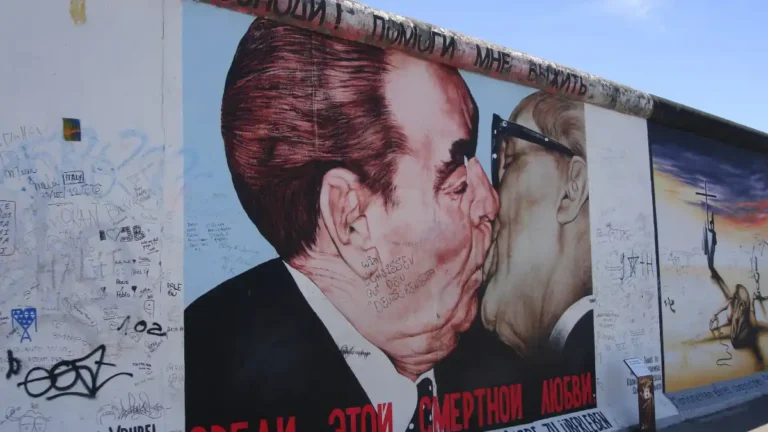


The corporate court has always had its courtiers. The trouble begins when the courtiers mistake access for authority.
When I entered the oil and gas industry in 2005, one name carried an almost mythical weight: Lord John Browne.
As Chief Executive of BP from 1995 to 2007, he was spoken of with a mixture of admiration and reverence that bordered on the religious. His reputation preceded him into every room. People rarely criticised him outright. They spoke his name in lowered voices, as though invoking a particularly gifted high priest of corporate strategy.
I was new to hydrocarbons and still learning the industry, so I had little basis on which to judge those whispers. But I was not new to life.
By then I had already spent years as an entrepreneur. I had built businesses, survived failures, and broken through ceilings that many assured me could never be broken. Experience leaves scars, and scars tend to make one sceptical of reputations. I had watched enough celebrated figures rise with great fanfare only to disappear into equally spectacular obscurity. By that point I had learned that the larger the legend, the more carefully one ought to inspect the man beneath it.
So I watched.
And I waited.
Lord Browne orchestrated what remains the most ambitious corporate rebranding the hydrocarbon industry has ever attempted. British Petroleum became simply BP—no longer shorthand for Britain’s petroleum champion, but reimagined as Beyond Petroleum. The old shield disappeared, replaced by the now-famous Helios sunburst. The message was unmistakable: BP would no longer define itself merely as an oil company. It would become a green energy company, morally and strategically distinct from the other supermajors.
It was an extraordinary piece of corporate theatre.
Unfortunately, reality refused to learn its lines.
Between 2005 and 2010, BP endured a succession of disasters that would have tested any management team. Refinery accidents. Operational failures. Safety controversies. Then came Deepwater Horizon—the catastrophe that stripped away the carefully cultivated green halo almost overnight.
Yet the operational disasters proved only part of the problem.
BP’s enormous investments in solar and wind performed disastrously as businesses. The financial returns simply failed to justify the rhetoric. Instead of reconsidering the strategy, however, the company eventually doubled down. Under Bernard Looney, appointed Chief Executive in 2020, BP embraced even more ambitious climate targets and committed itself ever more aggressively to the green transition.
Reality, however, continued sending invoices.
By 2023 Looney had resigned.
By 2024 BP was haemorrhaging money while significantly underperforming competitors that had remained considerably more cautious in their pursuit of fashionable virtue.
Then, in 2025, Murray Auchincloss effectively tore up the strategy. The company pivoted back toward oil and gas—the very business it had spent years trying to distance itself from.
Within little more than two decades, one of the world’s great energy companies had travelled from industry leader to credible takeover target.
History contains no shortage of celebrated chief executives who steered successful companies directly into walls while convinced they were leading visionary revolutions.
Many of them owed their status less to exceptional judgement than to exceptional narrative management. As long as they inherited healthy institutions—organisations built by engineers, operators, scientists and thousands of anonymous people doing real work—they could feast upon that accumulated strength while persuading both the public and themselves that every success originated with their brilliance.
Reality, meanwhile, waited patiently.
BP allowed true believers to ascend into the C-suite.
Eventually, it paid the bill.
Lord Browne, the man who set this long decline in motion, still appears convinced that he transformed BP for the better. He resembles the defeated politician who loses an election yet concludes not that his ideas failed, but that the electorate somehow failed to appreciate their magnificence.
Reality delivered the invoices.
The fool in the executive suite simply declined to read them.
For believers of this sort, reality is expected to accommodate the narrative—not the other way around.
The Invisible Coronation
The transition is almost impossible to see while it is happening.
No ceremony marks the occasion.
No promotion letter announces it.
No senior executive pulls the fool aside and says, “Congratulations. You have now mistaken symbolism for power.”
It happens by accumulation.
A compliment here.
An invitation there.
A conference.
A panel discussion.
A photograph beside senior leadership.
An article carrying his byline.
Another committee.
Another title.
Another audience.
Eventually something changes.
The applause begins to sound remarkably like authority.
The fool no longer believes he is simply carrying the banner.
He begins believing he designed it.
It is an entirely understandable mistake.
After years of rewards and recognition, why would he conclude otherwise?
Human beings possess an extraordinary talent for constructing stories that explain their own success. Very few ever arrive at the uncomfortable conclusion that they were merely useful.
We prefer nobler explanations.
We tell ourselves we were recognised because we possessed uncommon insight.
Vision.
Courage.
Moral superiority.
History, unfortunately, has never shown much sympathy for such stories.
Most people who rise inside institutions eventually persuade themselves that the institution reflects their virtues.
Very few ever stop to ask whether the institution merely found them convenient.
The Narrative Becomes Reality
The danger begins with an inversion so subtle that almost nobody notices it while it is taking place.
At the beginning of his ascent, the fool defended the narrative because it advanced his career.
Later, his career advances because he defends the narrative.
Eventually the relationship reverses entirely.
Now the narrative must be defended at all costs, because without it his position, his status and, increasingly, his identity begin to unravel.
Reality quietly changes places with theatre.
Facts become negotiable.
Language becomes elastic.
Failure is rebadged as success that has simply not yet been properly understood.
Contradictions are elevated into proof of sophistication.
If the numbers refuse to cooperate, redefine the numbers.
If reality refuses to cooperate, redefine reality.
By this stage, the fool no longer imagines he is serving power.
He has become convinced that power is finally catching up with him.
Standing Beside the Throne
One of humanity’s more remarkable talents is our ability to confuse proximity with influence.
Stand close enough to greatness for long enough and eventually some of its reflected light begins to look suspiciously like your own.
Royal courts understood this perfectly.
So did dictators.
So do chief executives.
The adviser begins believing he governs.
The spokesman gradually forgets that he is speaking someone else’s words.
The bodyguard mistakes access for authority.
The courtier mistakes familiarity for indispensability.
The mascot commits precisely the same error.
His photograph appears beside the king often enough that he eventually concludes the throne itself would wobble without him.
Power has always encouraged this illusion.
It is wonderfully inexpensive.
As long as the fool considers himself indispensable, he will labour tirelessly to prove it.
Nothing motivates quite so effectively as an illusion one has constructed oneself.
Sooner or later, however, enthusiasm demands expression.
For years the fool has faithfully defended ideas conceived by other people.
Eventually he wishes to contribute a few of his own.
It seems only natural.
If he truly occupies the moral high ground, why should he not also be allowed to redesign the landscape?
This is where the relationship changes.
Power appreciates loyal followers.
It is considerably less enthusiastic about ambitious ones.
The perfect servant amplifies decisions.
He does not originate them.
The fool, unfortunately, has lost the ability to distinguish between the two.
The Moment Usefulness Becomes Ambition
Every institution eventually encounters precisely this problem.
The very people elevated because they were useful slowly convince themselves that usefulness entitles them to influence.
The progression is almost mechanical.
Recognition breeds confidence.
Confidence breeds certainty.
Certainty breeds ambition.
Eventually ambition collides with reality.
And the higher the climb, the harder the collision.
The tragedy is that the fool cannot recognise the danger.
His entire experience inside the institution tells him that enthusiasm has always been rewarded.
Every spirited defence of the official line earned him greater visibility.
Every demonstration of loyalty moved him another rung upward.
Why should originality suddenly be treated differently?
Because originality was never what the institution rewarded.
Predictability was.
That single misunderstanding has destroyed countless careers.
Occasionally, it has destroyed far more than careers.
When Institutions Believe Their Own Stories
Large organisations seldom collapse because everyone inside them becomes corrupt.
They collapse because increasing numbers of people begin believing the official story they themselves helped invent.
Narratives are extraordinarily useful tools.
Until someone mistakes the map for the territory.
At that point they cease being tools.
They become prisons.
There is another irony hiding inside this process.
The opportunists—Carlo Cipolla’s bandits—almost always recognise the danger long before the true believers do.
Their convictions were never especially heavy.
They travelled light.
When the political wind changes direction, they simply change vocabulary.
When one programme fails, they quietly migrate to the next.
When yesterday’s orthodoxy falls from favour, they become tomorrow’s most enthusiastic champions of its replacement.
The evangelist merely changes pulpits.
The sermon changes with him.
The fool watches this performance with genuine bewilderment.
How can they abandon the cause so effortlessly?
The bandit merely shrugs.
“What cause?”
For him there was never a cause.
Only opportunity.
That distinction explains why opportunists so often survive institutional upheaval while believers are crushed beneath it.
The believer has invested his identity.
The opportunist has invested only his position.
One loses everything.
The other merely updates his biography.
The fool cannot imagine behaving this way.
Over the years he has fused himself to the institution.
Its victories became his victories.
Its moral claims became his convictions.
Its enemies became his personal enemies.
When the institution changes direction, it is not merely asking him to adopt a different policy.
It is asking him to become a different person.
That is a far more painful request.
Corporate Amnesia
We see this play out with remarkable regularity in corporate life.
A newly appointed chief executive unveils a sweeping transformation.
The language is magnificent.
Purpose.
Values.
Vision.
Culture.
Entire departments reorganise themselves around the new doctrine.
Employees disappear into workshops.
Fresh posters appear on office walls.
Internal videos celebrate the dawn of a glorious new era.
People build entire careers implementing the programme.
Three years later a recession arrives.
Or shareholders lose patience.
Or another chief executive occupies the corner office.
Suddenly the vocabulary changes.
Efficiency replaces transformation.
Cost discipline replaces experimentation.
Execution replaces vision.
The same people who once insisted that yesterday’s strategy was indispensable now champion its replacement with almost theatrical enthusiasm.
Some make the transition effortlessly.
Others cannot.
The institution quietly separates the two.
I have often wondered whether the modern corporation has become astonishingly proficient at manufacturing temporary certainty.
Perhaps it always was.
Only the slogans change.
Every few years the values are refreshed.
The logos evolve.
Mission statements are rewritten.
Strategic priorities rotate with astonishing regularity.
Yet beneath the cosmetic renovation, the mechanism remains curiously unchanged.
Every new doctrine requires ambassadors.
Every ambassador mistakes visibility for influence.
Every ambassador eventually discovers the limits of both.
A Worthy Cause Is Still a Banner
There is a temptation to dismiss all of this as mere cynicism.
To conclude that none of these initiatives matter.
That every programme is simply another exercise in corporate theatre.
I do not believe that.
Some initiatives genuinely improve organisations.
Some solve real problems.
Some leave institutions stronger than they found them.
The issue has never been whether the cause itself is worthy.
The issue is what institutions actually reward.
A good cause can become a vehicle for career advancement every bit as easily as a bad one.
Power is remarkably indifferent to the moral quality of the banner.
Its concern is far simpler.
Does the banner attract followers?
If it does, it is useful.
For a while.
The Rise of the Unofficial Hierarchy
Perhaps nowhere is this confusion between symbolic virtue and actual authority more dangerous than when organisations begin creating parallel centres of influence.
The formal structures remain intact.
Boards continue meeting.
Committees continue voting.
Executives continue signing documents.
On paper, nothing has changed.
Yet beside these official hierarchies another structure slowly begins to emerge.
Its authority rests neither on operational responsibility nor on measurable competence, but on perceived moral legitimacy.
Individuals gradually accumulate influence without ever formally acquiring power.
No one elected them.
No one explicitly appointed them.
No one can quite explain how they acquired such authority.
Yet everyone quickly learns that opposing them carries consequences.
These shadow hierarchies are extraordinarily difficult to detect while they are forming.
Once established, they prove even harder to dismantle.
By then they have ceased to depend upon formal authority.
They survive on reputation, consensus and social pressure.
Those are often stronger currencies than organisational charts.
The Comfort of Looking Responsible
One should be careful not to force history into neat theories.
Reality has a persistent habit of refusing to cooperate with elegant explanations.
Still, certain patterns become difficult to ignore.
Time and again, organisations confuse symbolic compliance with genuine oversight.
A useful example is Volkswagen.
Not because sustainability officers caused Dieselgate—they did not—but because the company demonstrates something far subtler and considerably more important.
Large organisations can become extraordinarily skilled at reassuring themselves.
Committees exist.
Reports are produced.
Compliance structures appear comprehensive.
Responsibilities are distributed across countless departments.
Everyone assumes somebody else must surely be watching.
Eventually, the existence of the structure itself becomes evidence that the problem has already been solved.
Meanwhile, reality proceeds entirely according to its own timetable.
When Dieselgate finally exploded into public view, it exposed far more than technical deception.
It revealed an institution that had become considerably better at demonstrating responsibility than at exercising it.
The distinction is not academic.
It is fundamental.
Because organisations repeatedly confuse the appearance of control with control itself.
The fool, naturally, cannot distinguish between the two.
He has spent years helping paint the scenery.
Eventually he forgets there is a stage behind it.
Nearing the Summit
This is where the ladder begins to narrow.
The higher one climbs, the fewer places remain to stand.
Visibility has become identity.
Identity has become ambition.
Ambition has become expectation.
The fool no longer wishes merely to belong.
Now he wishes to shape the future.
He has become convinced that he has earned that privilege.
For the first time, he is no longer competing with outsiders.
Nor with experts.
Nor with sceptics.
He is competing with the very people who built the ladder in the first place.
History offers remarkably few examples of that ending well.
Power is patient.
It tolerated enthusiasm.
It rewarded loyalty.
It manufactured recognition.
It even indulged the comforting illusion of influence.
But genuine rivalry?
That is an altogether different matter.
The fool has finally climbed high enough that usefulness begins transforming into liability.
He has mistaken the ascent for ownership.
He has forgotten the one rule every hierarchy remembers with perfect clarity.
The ladder never belongs to those climbing it.
It belongs to those holding it steady.